When the Ground Speaks and Nobody Listens: The Visibility Problem in American Archaeology
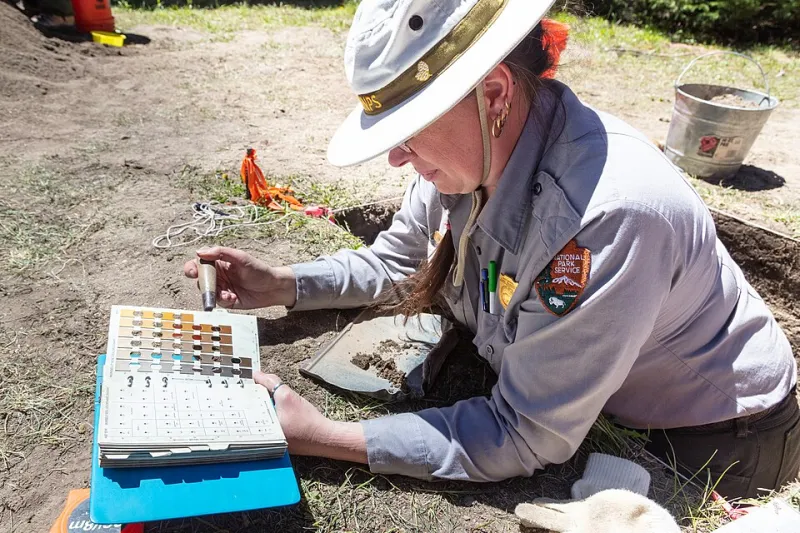
Photo: Jacob W. Frank, Public domain, via Wikimedia Commons
In 2011, researchers working in the Buttermilk Creek Complex in central Texas published findings that quietly repositioned the entire timeline of human habitation in North America. The assemblage of stone tools they recovered predated the Clovis culture by several thousand years—a revision with enormous implications for how we understand the peopling of the Americas. Coverage in mainstream American media was, by most measures, modest. Compare that reception to the breathless reporting that invariably accompanies any claim involving a supposed lost city, a buried treasure, or a connection to a pre-Columbian European voyage, and a troubling pattern emerges.
The discipline of archaeology produces genuinely world-altering knowledge on a fairly regular basis. Yet the public conversation about that knowledge remains dominated by narratives that are either scientifically dubious or deliberately sensationalized. Understanding why that gap exists—and what might be done about it—is not a trivial concern. It bears directly on public funding, legislative support for site protection, and the cultural authority of archaeology as a science.
The Attention Economy and the Archaeology Beat
Journalism, even science journalism, operates within an attention economy. Editors and producers make calculated decisions about which stories will hold an audience, and those decisions are shaped by a set of informal rules that do not always align with scientific significance. Novelty matters, but so does narrative simplicity. A discovery that requires two paragraphs of geological context before its importance becomes apparent is, from a production standpoint, a harder sell than one that can be summarized in a single arresting sentence.
Archaeological findings frequently fall into the first category. The significance of a newly identified lithic reduction technique, a revised radiocarbon sequence at a stratified site, or a statistically robust analysis of isotopic ratios in human remains often depends on background knowledge that general audiences do not possess. Communicating that significance without either oversimplifying or losing the reader is a genuine craft challenge—one that many academic press releases and journal abstracts do not attempt to meet.
This is not entirely the media's failure. The infrastructure through which archaeological research reaches the public is poorly designed for accessibility. Journal articles are paywalled. University press releases are written for other academics. Conference presentations are closed to the public. The pipeline between discovery and dissemination is full of friction at every stage.
What Gets Coverage Instead
The discoveries that do capture sustained public attention tend to share a recognizable set of features. They involve visually striking objects—gold, jade, monumental stone. They connect to civilizations that already occupy a prominent place in popular culture. They carry a whiff of mystery or controversy. And they are frequently tied to a charismatic individual whose personal story can carry the narrative.
None of these qualities are inherently problematic. The issue arises when they become the dominant filter through which archaeological significance is assessed by non-specialist audiences. When a fraudulent or poorly supported claim about Viking settlements or pre-Columbian contact generates more sustained coverage than a rigorously documented analysis of Indigenous agricultural systems in the pre-contact Midwest, the public receives a systematically distorted picture of what archaeology actually knows and how it knows it.
There is also a racial and cultural dimension to this distortion that deserves direct acknowledgment. Discoveries related to Indigenous North American peoples—the majority of what American archaeologists actually study—are consistently underrepresented in mainstream coverage relative to findings from Mediterranean, Egyptian, or Mesoamerican contexts. The implicit hierarchy of whose past is considered inherently interesting reflects broader cultural biases that the field has been slow to confront publicly.
The Institutional Responsibility
Museums occupy a unique position in this landscape. They are among the few institutions with both the public trust and the physical infrastructure to translate complex archaeological research into accessible experience. Yet too many American natural history and archaeology museums continue to organize their permanent collections around the same canonical narratives that have dominated public understanding for decades. The interpretive framework on the gallery wall often lags twenty years behind the research literature.
Universities, meanwhile, have invested heavily in research communication in recent years, but archaeology departments have been slower than some other disciplines to develop robust public-facing platforms. Podcasts, long-form digital storytelling, and social media engagement remain underutilized relative to their demonstrated capacity to reach non-specialist audiences. The assumption that serious scholarship and accessible communication are in tension—that popularization is somehow a compromise of rigor—persists in corners of the academy that can no longer afford it.
Professional organizations such as the Society for American Archaeology have roles to play as well. Advocacy for media literacy around archaeological claims, support for science communication training in graduate programs, and direct engagement with journalists covering the beat could all shift the informational environment meaningfully over time.
Toward a More Legible Discipline
None of this is an argument for dumbing down. The complexity of archaeological evidence is not an obstacle to public engagement—it is, for many audiences, the source of its appeal. What makes a site like Cahokia genuinely astonishing is not a simple story but a complicated one: a city of tens of thousands of people at the confluence of the Mississippi and Missouri Rivers, with sophisticated urban planning, long-distance trade networks, and a cosmological architecture embedded in its mounds, flourishing centuries before European contact. That story does not need to be simplified to be compelling. It needs to be told.
The field's visibility problem is, at its core, a storytelling problem. American archaeology has extraordinary material to work with. The record of human activity on this continent spans at least fifteen thousand years, encompasses hundreds of distinct cultural traditions, and continues to yield findings that fundamentally revise our understanding of human capability and adaptation. The discipline does not lack for significance. It lacks, in too many cases, the institutional will and the communicative infrastructure to make that significance felt.
Changing that will require deliberate effort across multiple fronts—from graduate training to museum programming to the way researchers write about their own work. The stakes are not merely academic. Public understanding of the deep past shapes present-day decisions about land use, site preservation, and the political recognition of Indigenous heritage. When consequential discoveries go unnoticed, it is not only science that loses.