Chemical Fingerprints in the Earth: How Isotopic Analysis Is Revealing the Scope of Pre-Columbian Trade
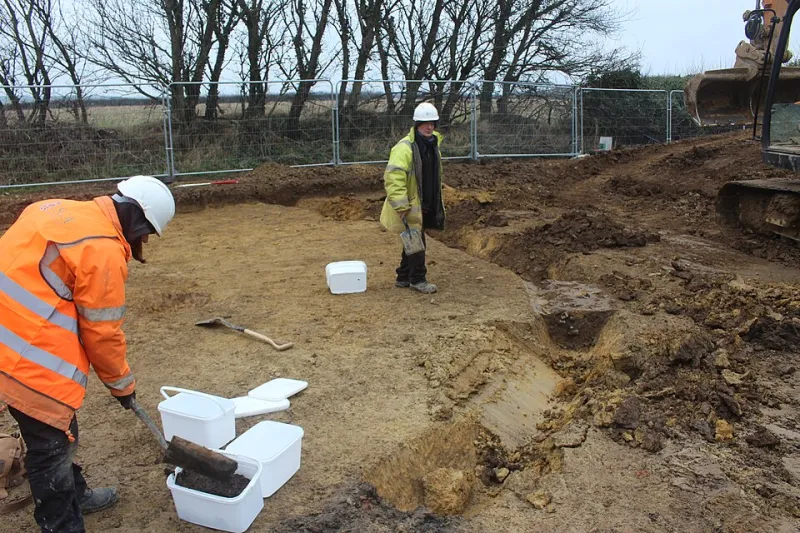
Photo: ISCA Archaeology, CC BY 4.0, via Wikimedia Commons
For much of the twentieth century, the dominant narrative surrounding pre-Columbian North America emphasized isolated, regionally contained societies — communities that traded occasionally but remained largely self-sufficient. That picture has been eroding steadily, and today it is collapsing entirely. A new generation of archaeologists, armed with tools borrowed from geochemistry and environmental science, is demonstrating that ancient peoples across the continent participated in vast, intricately organized exchange systems. The instrument driving much of this revision is isotopic analysis, a technique that allows researchers to determine not merely what an object is made of, but where — sometimes precisely where — its constituent materials originated.
What Isotopes Can Tell Us
Every geological formation on Earth carries a distinctive chemical signature, shaped by the specific ratio of isotopes present in its minerals. When ancient craftspeople quarried obsidian in what is now Wyoming, extracted copper from the Lake Superior basin, or harvested marine shells along the Gulf Coast, those materials retained the isotopic fingerprint of their source region. Strontium, lead, and oxygen isotope ratios are among the most frequently analyzed, because they vary predictably according to local geology and hydrology.
When an artifact fashioned from one of these materials turns up hundreds or even thousands of miles from its geological source, the isotopic data provides something that stylistic analysis alone cannot: an objective, chemically grounded argument for long-distance movement. Researchers can compare the isotopic profile of an artifact against a growing library of geological reference samples — a database that the scientific community has been expanding for decades — and identify probable points of origin with increasing confidence.
Soil chemistry adds another dimension to this work. Middens, hearth deposits, and occupation layers preserve organic and inorganic residues that reflect the full range of materials processed at a given site. Phytolith analysis, lipid residue studies, and trace-element mapping of sediment columns allow archaeologists to identify the presence of foodstuffs, resins, pigments, and other commodities that may have arrived through trade even when the objects themselves have long since decomposed.
The Hopewell Interaction Sphere Revisited
Perhaps no case illustrates the power of these methods more vividly than ongoing research into the Hopewell Interaction Sphere, a network of exchange relationships centered in the Ohio River valley that flourished roughly between 100 BCE and 500 CE. Archaeologists have long recognized that Hopewell ceremonial centers contained materials sourced from across the continent — grizzly bear teeth from the Rocky Mountains, mica from the Appalachians, obsidian from Yellowstone, and copper from the Great Lakes region.
Recent isotopic studies have sharpened this picture considerably. Lead isotope analysis of copper artifacts recovered from Hopewell mound complexes in Ohio has allowed researchers to distinguish between copper sourced from Michigan's Keweenaw Peninsula and deposits in other regions, clarifying supply chains that had previously been inferred only from artifact typology. Meanwhile, strontium isotope work on human skeletal remains from Hopewell sites suggests that some individuals buried in these ceremonial centers were themselves non-local, raising the possibility that people as well as goods moved along these corridors.
What emerges is not a simple picture of occasional gift exchange between neighboring chiefdoms, but something that begins to resemble a structured economic system — one with specialized production centers, recognized routes of conveyance, and nodes where commodities were aggregated and redistributed.
Chaco Canyon and the Southwest Corridor
In the American Southwest, isotopic research has been equally transformative. Chaco Canyon in northwestern New Mexico served as a regional hub for Ancestral Puebloan society between approximately 850 and 1150 CE, and archaeologists have long debated the precise nature of its economic relationships with surrounding communities. Isotopic analysis of turquoise artifacts recovered from Chacoan great houses has helped identify specific mining sources — including deposits in the Cerrillos Hills south of Santa Fe and the Kingman area of Arizona — demonstrating that raw material procurement extended across hundreds of miles.
Perhaps more striking is the isotopic work conducted on macaw remains from Chaco. Scarlet macaws, which were kept in captivity at Pueblo Bonito and other great houses, are not native to the Colorado Plateau. Strontium and oxygen isotope analysis of macaw bones has confirmed that many birds were imported from breeding facilities in northwestern Mexico, pointing to sustained organizational relationships between Chacoan society and communities far to the south. The logistics required to transport live tropical birds across desert terrain imply a level of coordination that challenges any characterization of these societies as simple or insular.
Methodological Challenges and Ongoing Debates
Isotopic archaeology is not without its complications. Geological formations can share overlapping isotopic ranges, making source attribution ambiguous in some cases. Post-depositional chemical alteration of artifacts and sediments can compromise data quality. And the reference databases that underpin provenance studies remain incomplete in many regions of North America, meaning that negative results — the failure to match an artifact to a known source — may reflect gaps in the database rather than genuinely local origins.
Researchers are also grappling with interpretive questions that chemistry alone cannot resolve. Knowing that a piece of obsidian traveled from Yellowstone to a site in Illinois does not, by itself, explain the social mechanisms that facilitated its movement. Was it traded directly between communities? Did it pass through a series of intermediaries? Was it carried by a traveling specialist, exchanged as a prestige gift, or redistributed by a central authority? Integrating isotopic data with spatial analysis, network modeling, and ethnographic analogy is an active area of methodological development.
Implications for the Broader Historical Record
The cumulative weight of isotopic research is reshaping how archaeologists, historians, and educators discuss pre-Columbian North America. The societies that built Cahokia in present-day Illinois, maintained the Hopewell ceremonial network, organized the Chacoan world, and connected the Mississippian chiefdoms of the Southeast were not operating in isolation from one another. They were participants in overlapping systems of exchange that moved raw materials, finished goods, ideas, and people across geographic scales that rival the scope of contemporaneous networks in Europe and Asia.
For students and professionals engaging with American archaeology, these findings carry a clear methodological lesson: the material record, read with sufficient chemical precision, speaks to questions that documentary history cannot address for the pre-contact period. The soil itself is an archive, and isotopic analysis is one of the most powerful tools available for reading it.