Trash Tells the Truth: How Salvage Archaeology Is Reading America's Backyard Garbage Before the Bulldozers Arrive
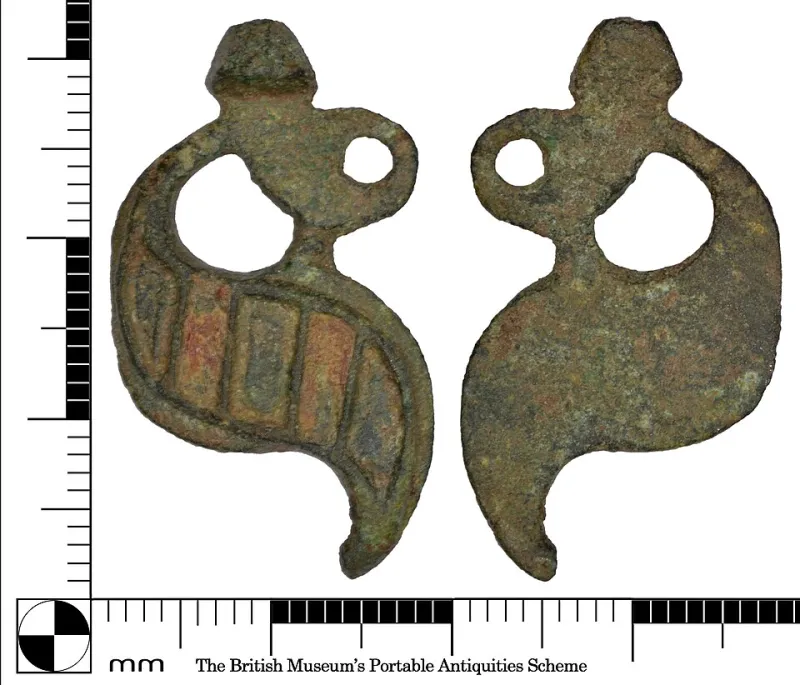
Photo: Suffolk County Council, Phil Hughes, 2020-10-23 15:31:05, CC BY-SA 4.0, via Wikimedia Commons
The excavation begins, as so many do, with a demolition permit. A developer in Philadelphia's Kensington section plans a mid-rise apartment block on a lot that has held, in succession, a row of workers' cottages, a machine shop, and a parking area. Before the foundation crews arrive, a small team with trowels, screens, and a backhoe's worth of patience has roughly six weeks to record what the property has been hiding for two centuries.
This is salvage archaeology—sometimes called cultural resource management in its contract-driven form—and in American cities it has become one of the discipline's most productive and least visible fronts. The sites are unglamorous. There are no temple mounds here, no gilded tombs. There are chamber pots, doll fragments, bottles of patent medicine, and the bones of Sunday dinner. And yet, read carefully, these deposits constitute one of the most democratic archives in the historical record.
Where the Ordinary Gets Preserved
The logic of urban archaeology inverts the usual assumptions about what survives. Wealthy households generated documents—letters, account books, inventories—that historians can mine for generations. Working-class families, particularly immigrant households in the nineteenth and early twentieth centuries, left far fewer written traces. What they left in abundance was garbage.
The urban backyard was, for much of American history, an open dump. Household refuse went into privy shafts, cisterns, and discrete trash pits, where anaerobic conditions sometimes preserved materials that would have rotted elsewhere. A sealed privy in a Boston triple-decker's yard might contain decades of deposition: ceramics that reveal shifting tastes in tableware, seeds and pits that map a family's diet, and the medicine bottles—often bearing the labels of local apothecaries—that hint at illness, self-treatment, and the quiet desperation of life before modern healthcare.
These assemblages do something no census record can. They show what people actually consumed rather than what tax assessors assumed they owned. A German immigrant family in Cincinnati might have kept Old World cooking vessels alongside American-made stoneware, a material negotiation of identity that appears in no naturalization paperwork.
The Race Against the Foundation Crew
The defining constraint of urban work is time. Federal and state preservation laws, notably Section 106 of the National Historic Preservation Act, require archaeological review for projects with federal permits or funding, but the scope of that review varies enormously by municipality. In cities with robust ordinances—New York's Landmarks Commission review, Alexandria, Virginia's long-standing archaeological protection code—salvage excavations are routine. In much of the country, they depend on the vigilance of contractors and the chance observations of passersby.
Archaeologists describe the work as triage. A team may have days, not months, to strip a site, map foundations, and sample deposits. The record is extracted under floodlights and between rainstorms, photographed, bagged, and hauled to a lab where the real analysis begins—often years after the building above it has been occupied.
The results accumulate in the aggregate. Studies of assemblages from New York's Five Points, Boston's North End, and dozens of smaller cities have collectively revised our understanding of nineteenth-century consumer culture, showing that working-class families participated in national markets for mass-produced goods far earlier and more thoroughly than previously assumed.
What the Garbage Says About Us
There is a temptation to treat such material as merely quaint, but the evidence cuts deeper. Deposit patterns reveal segregation in how households disposed of waste—and by extension, how neighborhoods were organized along lines of class and ethnicity. The absence of certain artifacts can be as telling as their presence: a household that consumed expensive ceramics but lacked the means to repair them, or a tenement whose residents discarded nothing of value because nothing of value came through the door.
For descendants of the communities these sites represent, the work carries particular weight. Urban excavations of immigrant neighborhoods have, in recent years, increasingly involved consultation with community groups, transforming what was once a purely academic exercise into a form of public memory.
The kitchen midden in the backyard is not a monument. It will never anchor a tourism campaign or justify a museum wing. But it is the most honest record most Americans ever left—and as the cranes multiply over the nation's older cities, the archaeologists racing to read it are, deposit by deposit, filling in the history of people who never expected to be remembered.