Five Finds That Forced a Rewrite: Artifacts That Overturned What We Thought We Knew
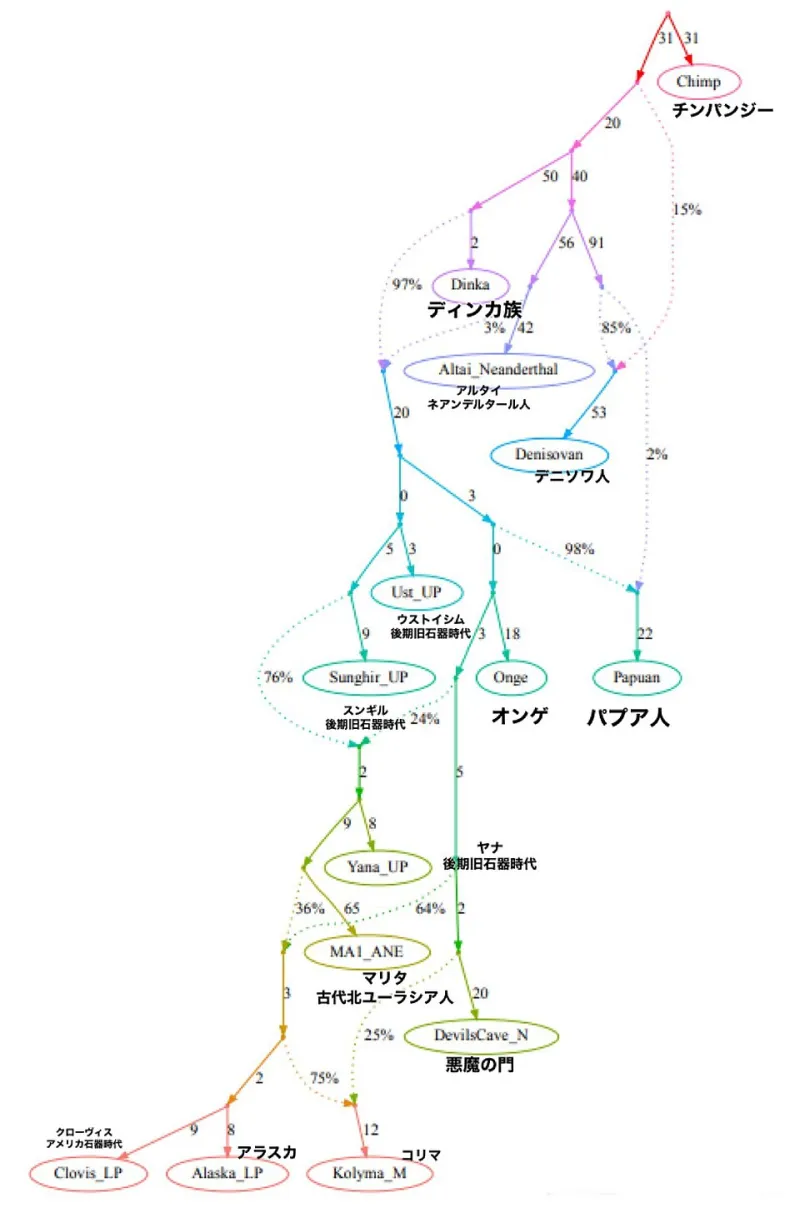
Photo: Robert Maier, Pavel Flegontov, David Reich et al. 2023, CC BY-SA 4.0, via Wikimedia Commons
Archaeology's textbooks are never finished; they are merely between editions. The discipline's history is a sequence of confident pronouncements undone by objects that refused to fit. What follows are five American finds that did not merely add detail to the record but forced fundamental revisions to it.
1. The Kennewick Man and the Limits of Ownership
When two college students stumbled across a skull along the Columbia River in Washington State in 1996, the initial reconstruction suggested features resembling a European settler—prompting breathless speculation about pre-Columbian transoceanic visitors. Radiocarbon dating quickly established the remains at more than 8,500 years old, among the oldest complete skeletons found in North America.
The controversy that followed reshaped the field. Federal agencies moved to repatriate the remains to regional tribes under NAGPRA; scientists sued to study them. The resulting litigation ran for nearly a decade and reached Congress. When genomic analysis was finally performed in 2015, the results were decisive: Kennewick Man was more closely related to Native Americans than to any other population. The very science invoked to justify study ended up affirming the ancestral claims of the tribes who had sought his return. He was reburied in 2017.
2. Mississippian Copper Plates: The Misread Masterworks
Copper plates recovered from sites like Etowah in Georgia and Moundville in Alabama were long dismissed by early antiquarians as trade curiosities—perhaps imports, perhaps crude ornament. Systematic study of their iconography, beginning in the mid-twentieth century, revealed something extraordinary: sophisticated repoussé work depicting the ceremonial themes of the Southeastern Ceremonial Complex, including the famed 'dancing birdman.'
The revision mattered enormously. These were not peripheral curiosities but central religious objects of a continent-spanning ritual sphere, evidence that Mississippian societies sustained long-distance exchange networks and a shared symbolic system comparable in ambition to anything in the contemporary world.
3. The Clovis-First Collapse at Monte Verde
For half a century, American archaeology operated on a near-uniform assumption: humans arrived via Beringia roughly 13,000 years ago, and the Clovis culture marked their earliest presence. Sites suggesting earlier dates were treated as errors awaiting correction.
The Chilean site of Monte Verde, dated to at least 14,500 years before present, refused correction. Excavator Tom Dillard's careful stratigraphy and preservation of organic materials withstood a famously adversarial site inspection in 1997, and the consensus broke. The implications rippled northward: if the peopling of the hemisphere was earlier and more complex than believed, the Clovis-first model—and the migration timeline built upon it—had to be abandoned.
4. Cahokia's Woodhenge: Astronomy Where None Was Expected
Excavations at Cahokia, Illinois, in the 1960s uncovered arrangements of large cedar posts whose purpose puzzled researchers. Once their alignments were plotted, the answer was unmistakable: solar calendars, marking solstices and equinoxes, rebuilt in successive generations.
The find dismantled lingering assumptions that monumental astronomical knowledge was absent from pre-Columbian North America. Cahokia's planners tracked celestial cycles with precision, integrating astronomy into the layout of the largest city north of Mexico.
5. The Spirit Eye Cave Textiles: Rewriting Southwestern Trade
Textiles recovered from Spirit Eye Cave in Texas, studied with modern radiocarbon and fiber-analysis techniques, revealed trade connections stretching across the Southwest centuries before European contact—threads, quite literally, of exchange systems that older models of isolated regional cultures could not accommodate.
Why Revisions Matter
Each of these cases followed the same arc: initial misreading, scientific challenge, and a corrected story with real consequences for living communities. In archaeology, being wrong is not the failure; refusing to revise is.