Hollow Ground: What the Archaeological Record Doesn't Contain—and Why That Matters

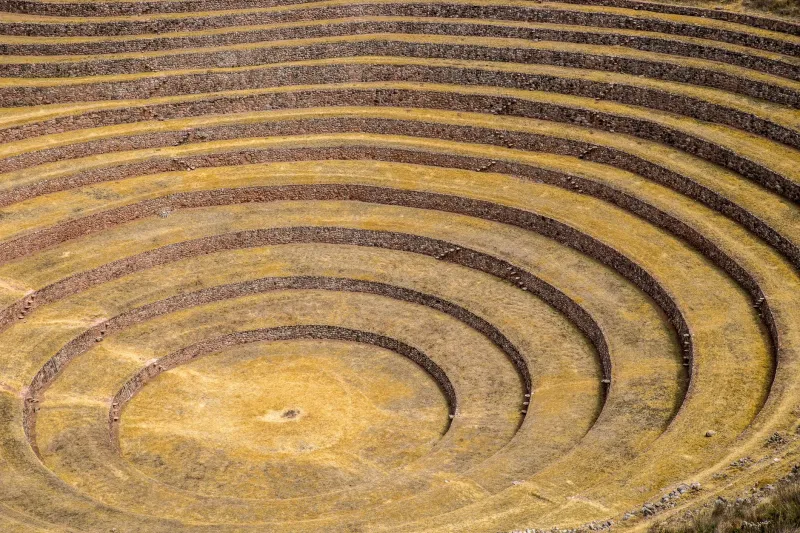
Photo by Photo by Marissa Duenas on Unsplash on Unsplash
Archaeology is, by its nature, a discipline built on what survives. Researchers sift soil, catalog fragments, and reconstruct lifeways from the material residue of human activity. But a fundamental methodological question has gained considerable traction in recent years: what happens when the record has been deliberately emptied? When the absence of objects is not the result of organic decay or the accidents of preservation, but of sustained, purposeful erasure?
For scholars working at the intersection of colonial history and Indigenous archaeology in the United States, this question is no longer theoretical. It is, increasingly, the central problem of the field.
Defining the Archaeology of Absence
The concept of "negative evidence" in archaeology—interpreting what is missing as analytically significant—is well established. Researchers have long used the absence of certain ceramic styles, faunal remains, or structural features to draw conclusions about trade disruption, population movement, or environmental stress. What is newer, and more politically charged, is the systematic application of this framework to colonial violence.
Scholars such as those working within the emerging subfield sometimes called "absence archaeology" argue that the deliberate destruction and confiscation of Indigenous objects during the colonial period created archaeological signatures that are identifiable, mappable, and interpretable. The challenge lies in distinguishing between natural taphonomic loss—objects that simply did not survive—and culturally enforced disappearance: objects that were taken, burned, buried by policy, or otherwise removed from the communities that produced them.
This distinction matters enormously. One kind of absence tells us about soil chemistry and the fragility of organic materials. The other tells us about power.
Case Study: The Suppression of Ceremonial Objects in the Southwest
Perhaps no region of the United States offers a more thoroughly documented case of deliberate material erasure than the American Southwest. Following the establishment of federal boarding school programs in the late nineteenth century—institutions explicitly designed to sever Indigenous children from their cultural inheritances—federal agents and missionary organizations undertook systematic campaigns to collect and destroy ceremonial objects associated with Puebloan, Navajo, and Apache communities.
Archival records held at institutions including the National Archives and the Smithsonian Institution document the confiscation of kachina figures, prayer sticks, and ritual textiles. Correspondence between Bureau of Indian Affairs administrators details not merely the collection of such objects, but explicit instructions for their destruction when they were deemed too "dangerous" to preserve even as museum specimens.
When archaeologists conduct surface surveys in areas adjacent to former boarding school facilities, they frequently encounter a conspicuous thinning of the material record in the decades corresponding to peak institutional activity. Oral histories collected from Pueblo elders describe the hiding of objects in remote locations—a form of material resistance that has, in some cases, been corroborated by subsequent excavation of concealment caches.
The convergence of archival documentation, oral testimony, and excavation data creates a triangulated picture of deliberate absence that no single line of evidence could establish alone.
Repatriation Records as Archaeological Data
One of the more innovative methodological developments in this area has been the scholarly use of museum repatriation records—particularly those generated under the Native American Graves Protection and Repatriation Act (NAGPRA), enacted in 1990—as a form of archaeological data.
When institutions compile NAGPRA inventories, they are, in effect, documenting the colonial pipeline through which Indigenous material culture flowed from communities into institutional collections. Researchers including those affiliated with the University of New Mexico and the Field Museum have begun analyzing these inventories not merely as administrative records, but as evidence of systematic extraction patterns.
By mapping the provenance data embedded in repatriation records—when objects were collected, by whom, under what circumstances, and from which communities—researchers can reconstruct the geography and chronology of material dispossession with remarkable specificity. Communities that experienced the heaviest missionary or federal administrative presence in particular decades show corresponding spikes in object extraction during those same periods. The repatriation record, read archaeologically, becomes a negative image of what the ground no longer holds.
The Problem of Burned and Destroyed Objects
Not all confiscated objects ended up in museum storage. A substantial portion were destroyed outright—burned, smashed, or buried in unmarked locations by colonial administrators who viewed ceremonial material culture as an obstacle to assimilation. This category of loss presents the greatest methodological challenge, because destroyed objects leave only indirect traces.
Researchers have approached this problem through several avenues. Soil chemistry analysis at sites adjacent to former missionary compounds has, in select cases, identified burning events consistent with large-scale destruction of organic and composite materials. Dendrochronological analysis of structural remains at boarding school sites has helped establish timelines that can be cross-referenced with documented destruction campaigns.
Perhaps most productively, researchers have turned to comparative analysis: examining what categories of objects survive in the archaeological and ethnographic record from communities that were less intensively colonized, and using those survival rates as a baseline against which to measure the deficits present in more heavily administered communities. The gaps that emerge from this comparison are not random. They cluster around specific object types—ceremonial, communicative, and identity-bearing materials—in ways that reflect the explicit priorities of colonial suppression policy.
Oral Histories and the Recovery of the Invisible Record
In communities where the material record has been most severely disrupted, oral histories have become an indispensable archaeological resource. Ethnographers and archaeologists working in collaborative frameworks with tribal nations across the Southwest, the Great Plains, and the Pacific Northwest have documented detailed community memories of specific objects: their forms, their functions, their fates.
These accounts do not merely supplement the archaeological record. In many instances, they constitute the only surviving evidence that particular categories of objects existed at all. When a Lakota elder describes in precise detail the construction and ceremonial use of an object type for which no physical specimen survives, that testimony carries evidentiary weight that demands methodological acknowledgment.
The integration of oral history into archaeological interpretation remains contested in some quarters of the discipline, where concerns about corroboration and bias are raised. But researchers working in this area argue, persuasively, that the methodological standards applied to oral evidence should be no more stringent than those applied to archival documents—which are themselves produced within contexts of institutional interest and selective preservation.
Implications for Practice and Policy
The archaeology of colonial absence carries implications that extend well beyond the academy. If the gaps in the Indigenous archaeological record are, in significant part, the product of deliberate policy rather than natural process, then the interpretive frameworks applied to those gaps must change accordingly. Models of pre-contact and early contact period Indigenous life that treat the surviving record as representative are, by this analysis, systematically distorted.
For heritage policy, the implications are equally significant. Repatriation efforts that focus exclusively on objects that physically survive in institutional collections do not address the full scope of material loss. A more complete accounting would require engagement with destroyed objects, suppressed practices, and the communities whose material heritage was most comprehensively dismantled.
That accounting is underway. Slowly, through the convergence of archival research, isotopic analysis, collaborative ethnography, and the patient interrogation of what is not there, researchers are beginning to read the hollow ground—and to understand, with increasing precision, what it was made to forget.