Racing the Clock: How America Is Losing Its Archaeological Heritage Before It Can Be Saved

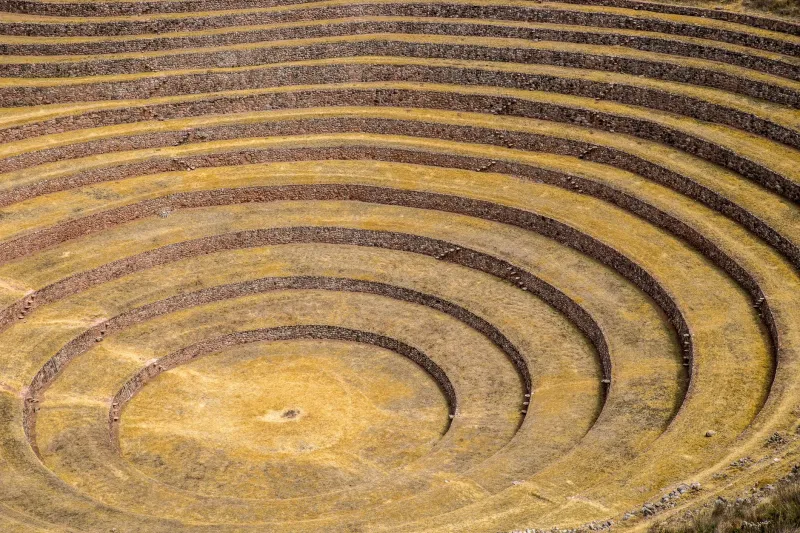
Photo by Photo by Hulki Okan Tabak on Unsplash on Unsplash
In the spring of 2021, a construction crew breaking ground for a residential development in central Tennessee uncovered what appeared to be a scatter of fire-cracked rock and ceramic fragments — the quiet signature of a Mississippian-period occupation site. The project was briefly halted. A cultural resource management (CRM) firm was dispatched. Within seventy-two hours, the crew had returned to work. The site, estimated to be between 800 and 1,000 years old, had been partially documented but not fully excavated. The remainder was graded into the foundation.
Scenes like this unfold hundreds of times each year across the United States. They are not anomalies. They are the norm.
A Crisis Without a Headline
Archaeological site loss in America does not generate the kind of dramatic imagery that galvanizes public attention. There are no burning buildings, no singular moments of catastrophic collapse. The loss is incremental, dispersed, and largely invisible — a few hundred square meters here, a buried midden there, a petroglyph panel slowly exfoliated by acid rain. Yet the cumulative toll is staggering.
The National Register of Historic Places currently lists approximately 95,000 properties, a fraction of the sites believed to exist across the country. Estimates from federal agencies and state historic preservation offices suggest that tens of thousands of significant archaeological sites have been lost or severely compromised in the past three decades alone. The causes are multiple and compounding: urban and suburban development, agricultural expansion, climate-driven erosion, looting, and the persistent underfunding of the agencies tasked with protecting what remains.
"We are doing triage," said one senior archaeologist with a federal land management agency, speaking on background because they were not authorized to comment publicly. "Every field season, we are making decisions about which sites get documented and which ones we have to let go. That is not a position anyone in this discipline ever expected to be in."
Development as Demolition
Section 106 of the National Historic Preservation Act of 1966 requires federal agencies to consider the effects of federally funded or permitted projects on historic properties, including archaeological sites. In practice, this has given rise to the CRM industry — private firms contracted to conduct surveys and, where necessary, salvage excavations before construction proceeds.
CRM archaeology now constitutes the majority of archaeological fieldwork conducted in the United States. It has preserved an enormous body of data that would otherwise have been destroyed without record. But critics within the discipline argue that the model is structurally compromised. CRM firms are hired and paid by the developers whose projects they are evaluating. Timelines are dictated by construction schedules, not research needs. And the threshold for what constitutes a site significant enough to warrant full excavation — rather than a cursory survey and a mitigation report — is frequently contested and inconsistently applied.
"The question is never just 'is this site significant?' " noted one archaeologist with extensive CRM experience. "The question is always 'significant enough to delay a project worth how many millions of dollars?' Those are very different questions, and the answer to the second one shapes everything."
The Accelerating Factor: Climate Change
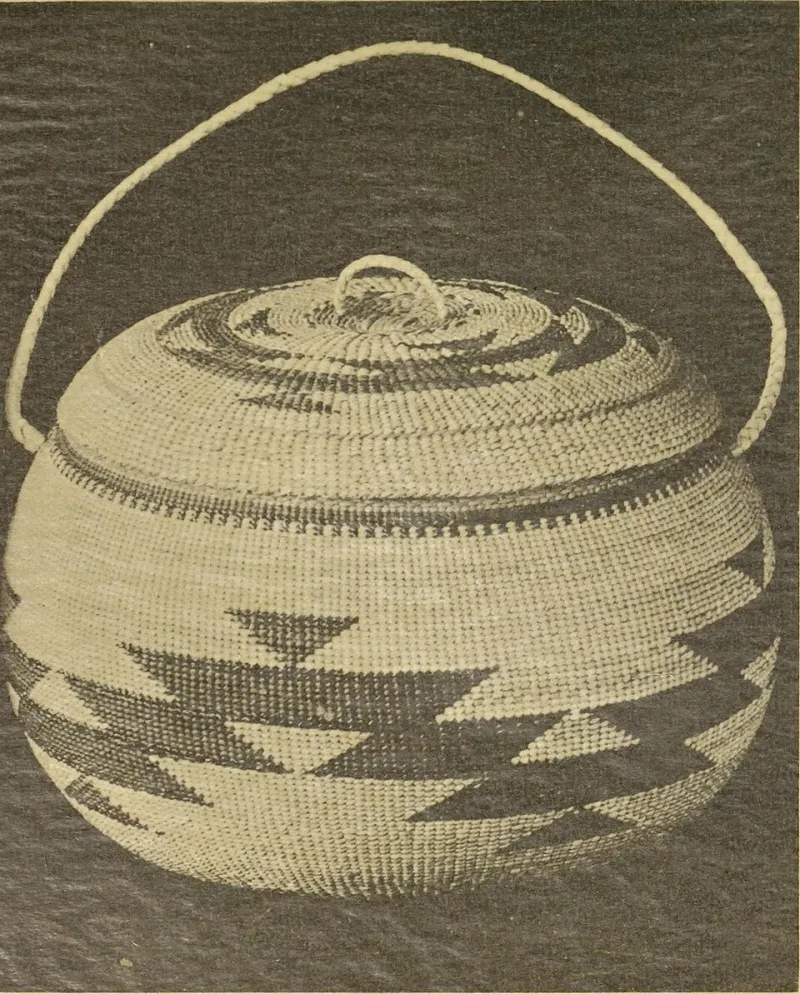
If development represents a chronic pressure on the archaeological record, climate change is increasingly functioning as an acute one. Coastal erosion driven by sea-level rise and intensifying storm systems is destroying sites along the Atlantic and Gulf coasts at rates that have alarmed researchers. In Alaska, permafrost thaw is exposing — and simultaneously degrading — organic materials preserved for millennia: wooden tools, animal remains, human burials, and woven textiles that offer irreplaceable windows into pre-contact lifeways.
A 2019 assessment by the National Park Service identified more than 100 coastal archaeological sites within the National Park System that face significant erosion risk within the next two decades. That figure encompasses only sites already inventoried within a single federal system. The broader universe of vulnerable sites along American coastlines — including those on state, tribal, and private lands — is vastly larger and largely unquantified.
In Louisiana, where coastal land loss is measured in football fields per hour, shell middens and village sites associated with the Atakapa-Ishak, Chitimacha, and other Indigenous nations are disappearing into the Gulf of Mexico before they have been formally recorded. Tribal historic preservation officers have described the situation as a secondary dispossession — a loss not only of land, but of the physical evidence of the lives lived upon it.
Looting and the Market for the Past
Not all site destruction is incidental. A significant and difficult-to-quantify portion is deliberate. Artifact looting remains a pervasive problem across the American Southwest, the Great Plains, and the Eastern Woodlands. Federal lands — managed by the Bureau of Land Management, the Forest Service, and the National Park Service — are particularly vulnerable given the vast acreages involved and the limited enforcement resources available.
The Archaeological Resources Protection Act of 1979 established federal criminal penalties for unauthorized excavation and removal of archaeological resources from federal and tribal lands. Convictions, however, remain relatively rare. Prosecutions require documented site damage, chain-of-custody evidence, and prosecutorial willingness to pursue cases that rarely generate significant public attention. Meanwhile, the market for pre-Columbian artifacts — both domestic and international — continues to provide financial incentive for illicit digging.
The damage inflicted by looting extends beyond the objects removed. Archaeological context — the precise spatial and stratigraphic relationships between artifacts, features, and environmental data — is the primary medium through which archaeologists reconstruct past behavior and social organization. A pot extracted from a burial without documentation is not merely a stolen object; it is a destroyed argument. The questions it might have answered are permanently closed.
Rescue Archaeology and the Data-First Imperative
In response to accelerating site loss, a growing number of researchers and institutions have begun advocating for what might be termed a data-first approach to preservation — prioritizing the rapid, systematic documentation of threatened sites even when full excavation is impossible. Advances in photogrammetry, drone-based aerial survey, and ground-penetrating radar have made it possible to generate detailed three-dimensional records of sites in a fraction of the time and cost required by traditional methods.
Several state historic preservation offices have launched dedicated rapid-response programs designed to mobilize documentation teams when threatened sites are identified. Tribal historic preservation offices in several regions have developed their own survey and recording capacities, often with an emphasis on oral history integration and community-defined significance criteria that differ meaningfully from federal standards.
These initiatives are promising. They are also insufficient to the scale of the problem. Documentation, however thorough, is not excavation. A photogrammetric model of a site surface captures geometry; it does not capture the stratigraphic sequence, the faunal assemblage, the botanical remains, or the isotopic signatures that constitute the full evidential record. What is documented but not excavated is preserved in a diminished form — better than nothing, but not equivalent to the original.
Which Histories Get Saved
Perhaps the most consequential dimension of the current crisis is the one least often stated plainly: the losses are not distributed evenly. Sites associated with Indigenous nations, with enslaved communities, with the poor and the marginalized, are disproportionately vulnerable. They are less likely to have been previously identified and placed on protection registers. They are less likely to be located in areas with active advocacy communities. They are less likely to be the subject of donor-funded academic research programs.
The infrastructure of preservation in the United States was built, in large part, around a conception of heritage that centered European-descended narratives and monumental architecture. Earthen mounds, shell middens, and subsurface village deposits do not announce themselves to the casual observer. Their significance is legible only to those trained to read the ground — and only if the ground remains intact long enough to be read.
The archaeology of absence is not merely a technical problem. It is a reflection of which lives a society has chosen to render legible, and which it has been content to let the earth reclaim. That reckoning belongs not only to archaeologists, but to the institutions and communities that decide, year after year, how much of the past is worth the cost of saving.