What the Textbooks Left Behind: Indigenous Innovation and the Archaeology Curriculum Gap
Somewhere between the excavation trench and the classroom, the evidence disappears.
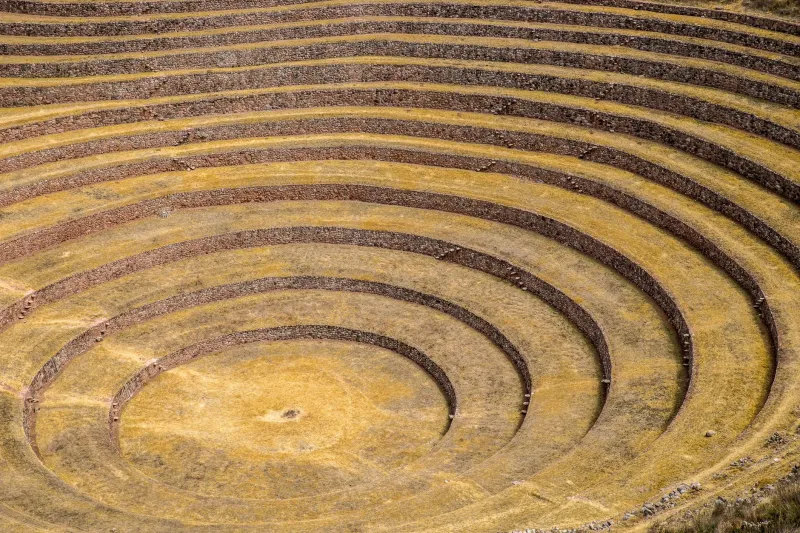
Archaeologists have spent decades recovering proof of remarkable Indigenous achievement across North America — engineered agricultural terraces in the Southwest, sophisticated hydraulic systems in the Mississippi Valley, densely planned urban cores at sites like Cahokia that rivaled contemporaneous cities in medieval Europe. Peer-reviewed journals have published this research. University courses teach it. And yet, when the average American student opens a history textbook, those findings are largely absent, compressed into a paragraph, or filtered through language that diminishes their significance.
The gap between what archaeology has established and what curricula actually convey is not a minor editorial oversight. According to educators, archaeologists, and Indigenous scholars who have examined this problem closely, it reflects something more structural — a persistent institutional resistance to revising foundational American historical narratives, even in the face of compelling scientific evidence.
What the Science Actually Shows
The archaeological record of pre-Columbian North America is far richer, and far more complex, than most Americans are taught to expect. At Cahokia, located near present-day St. Louis, researchers have documented a planned urban settlement that at its peak housed a population estimated between ten and twenty thousand people — larger than London at the same period in the eleventh century. The site features a monumental earthwork, Monks Mound, that contains more material by volume than the Great Pyramid of Giza. Sophisticated astronomical alignments, evidence of long-distance trade networks, and organized civic infrastructure have all been documented through decades of excavation.
In the American Southwest, the Hohokam constructed an irrigation canal network spanning hundreds of miles across the Sonoran Desert, a feat of hydraulic engineering that modern water managers in Arizona still study and, in some areas, continue to use. In the Eastern Woodlands, analysis of ancient agricultural plots has revealed deliberate soil management and polyculture systems — including the well-documented Three Sisters companion planting model — that modern agronomists recognize as ecologically sophisticated and, in some respects, ahead of European farming practices of the same era.
Paleobotanical and isotopic research has further complicated older narratives. Studies of ancient plant remains and human bone chemistry have demonstrated that Indigenous communities across the continent were selectively cultivating, transplanting, and genetically shaping plant species long before European contact — a process that some researchers now describe as a form of domestication that fundamentally altered North American landscapes.
The Curriculum Problem
Despite this accumulation of evidence, the treatment of pre-Columbian Indigenous history in American K-12 education has changed remarkably little over the past several decades. A review of commonly adopted textbooks across multiple states reveals a consistent pattern: Indigenous peoples are introduced primarily as context for European arrival, their societies described in generalized terms that emphasize subsistence and mobility while omitting evidence of urban complexity, technological innovation, or large-scale environmental management.
Educators who have attempted to introduce more current archaeological perspectives into their classrooms frequently encounter structural obstacles. State curriculum standards, which govern what is tested and therefore what is taught, rarely reflect contemporary archaeological consensus. Textbook adoption cycles — which in large states like Texas and California can lock schools into a single volume for a decade or more — mean that outdated frameworks persist long after the research community has moved on.
"The problem isn't that teachers don't want to teach this material," notes one curriculum specialist who has worked with school districts in the Midwest. "The problem is that the standards don't require it, the textbooks don't include it, and there's no professional development infrastructure to help teachers incorporate new findings even when they're motivated to do so."
Indigenous scholars have identified an additional dimension to the problem: the framing of pre-Columbian history as something that requires archaeological validation in the first place. Many of the achievements now being recovered through excavation were never forgotten by the communities whose ancestors built them. Oral traditions, Indigenous scholarship, and tribal historical records have long documented what archaeology is only recently corroborating. The emphasis on Western scientific verification as the threshold for curricular inclusion implicitly devalues Indigenous knowledge systems and positions archaeology as the authoritative arbiter of a past that Indigenous communities have maintained continuous relationships with.
Institutional Inertia and the Politics of the Textbook
The forces that shape what appears in American history textbooks are not purely academic. Textbook content is influenced by state adoption boards, political pressure, publishing economics, and longstanding assumptions about whose history counts as foundational to American identity. Revising the narrative of pre-Columbian North America to reflect current archaeological evidence would require not just updating facts but reconsidering the conceptual architecture of American history itself — a project that has proven politically contentious wherever it has been attempted.
This is not a new observation. Scholars have documented for decades the ways in which American historical education has been shaped by narratives of European discovery and settlement that depend, at least implicitly, on a prior condition of Indigenous absence or simplicity. Introducing evidence of sophisticated pre-Columbian civilizations disrupts that framework in ways that some find uncomfortable, not because the evidence is contested but because its implications are inconvenient.
Archaeologists working at sites with direct educational outreach components have experimented with ways to bridge this gap. Public archaeology programs at Cahokia Mounds State Historic Site in Illinois, for example, offer school visits and interpretive programming that engage students directly with the material evidence of Mississippian urban life. Similar efforts at Chaco Culture National Historical Park in New Mexico have brought archaeological findings into conversation with Pueblo communities whose ancestral connections to the site inform both interpretation and pedagogy.
These programs are valuable, but they reach a fraction of American students. For the majority, the textbook remains the primary lens through which pre-Columbian history is encountered.
Toward Evidence-Based Curriculum Reform
A growing coalition of archaeologists, educators, and Indigenous community advocates has begun pushing for curriculum reform that grounds the teaching of pre-Columbian history in current archaeological and Indigenous scholarly consensus. Their proposals share several common features: mandatory engagement with site-specific archaeological evidence rather than generic cultural overviews, integration of Indigenous intellectual frameworks alongside Western scientific findings, and revision of state standards to require coverage of pre-Columbian complexity at a level commensurate with what the evidence supports.
Some states have begun moving in this direction. Recent revisions to social studies standards in several states have introduced more specific requirements around Indigenous history, though implementation remains uneven and the depth of coverage varies considerably.
The archaeological record is not static. New discoveries, refined dating techniques, and advances in ancient DNA analysis continue to reshape scholarly understanding of pre-Columbian North America at a rapid pace. The challenge for educators is not simply to catch up with what is already known but to build frameworks flexible enough to incorporate what is still being learned.
What the ground contains, and what it tells us about the depth and sophistication of human life in North America before European contact, is one of the most consequential bodies of knowledge in American science. Whether that knowledge reaches the next generation of students is, ultimately, a question of institutional will — and of whose history we decide is worth teaching.