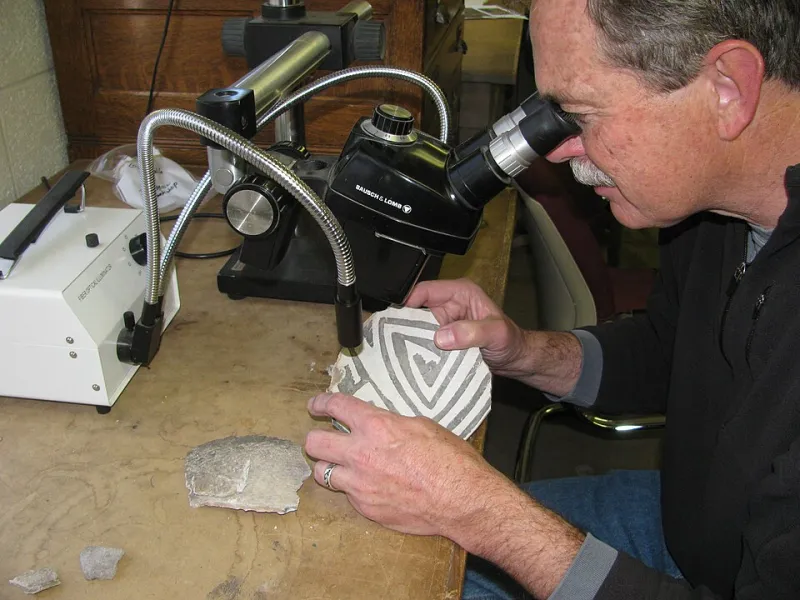
Stored Into Oblivion: The Silent Crisis of Neglected Archaeological Collections in American Universities
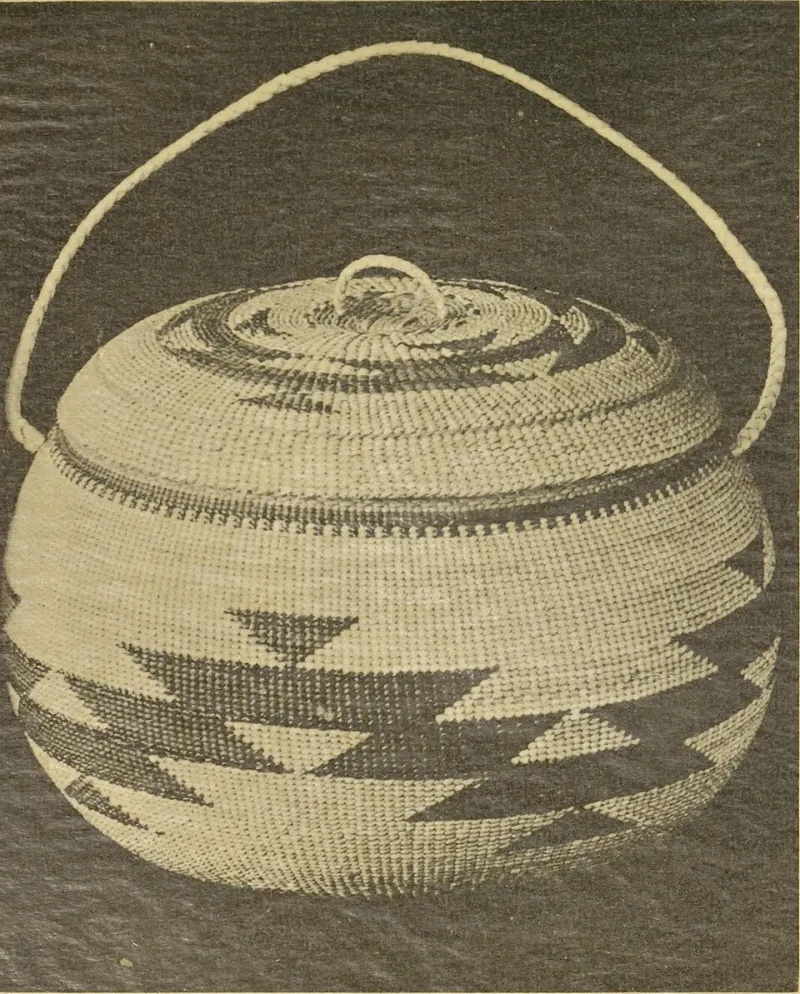
Photo: Internet Archive Book Images, No restrictions, via Wikimedia Commons
There is a particular kind of disappearance that requires no theft, no flood, no fire. It demands only time, underfunding, and institutional indifference. Across American universities, hundreds of thousands of archaeological artifacts—ceramic sherds, lithic assemblages, faunal remains, soil samples, and the field notes that give them meaning—sit in labeled boxes on metal shelving units in rooms that few people visit and fewer still have the resources to properly manage. These objects have not been lost in any conventional sense. They can, in principle, be located. Yet for the purposes of active scholarship, comparative research, or cultural repatriation, they might as well not exist.
This phenomenon has a name in the professional literature. Archaeologists and museum scientists call it the curation crisis, and its dimensions are considerably larger than the discipline's public profile might suggest.
How the Crisis Was Built, One Field Season at a Time
The origins of the problem are structural rather than accidental. For most of the twentieth century, American archaeology operated under an implicit and largely unexamined assumption: that excavation was the primary intellectual act, and that the long-term care of recovered material was an administrative afterthought. Universities established archaeology programs, funded fieldwork, and published findings—but rarely budgeted in any sustained way for the permanent stewardship of what those field seasons produced.
The result was a slow accumulation of material that outpaced institutional capacity. By some estimates, American repositories—including universities, state agencies, federal facilities, and museums—currently hold in excess of one billion artifacts. A landmark study conducted for the National Park Service in the mid-1990s found that a substantial portion of federally affiliated collections were inadequately housed, improperly documented, or both. Conditions have improved in some quarters since then, but the underlying structural problem has never been fully resolved.
At the university level, the situation is complicated by the nature of academic incentives. Faculty archaeologists are rewarded for publication, grant acquisition, and fieldwork productivity. Cataloging legacy collections—painstaking, unglamorous, and rarely fundable through conventional research grants—occupies a different register of professional value entirely. Graduate students who might otherwise assist with such work are themselves oriented toward generating new data rather than systematizing old material. The collections, accordingly, wait.
When Documentation Disappears Along with the Researcher
Perhaps the most acute dimension of the crisis is not the condition of the artifacts themselves but the fragility of the documentation that makes those artifacts interpretable. An isolated ceramic sherd is, in isolation, a limited scientific resource. Its value multiplies enormously when it can be associated with a specific stratigraphic context, a site map, a field director's observations, and a chain of comparative analysis. When that documentation is absent—because field notes were never digitized, because a retiring professor's files were discarded, because a departmental reorganization severed the connection between object and record—the artifact is effectively decontextualized.
This form of information loss has no dramatic narrative. It accumulates through retirement parties and office cleanouts, through underfunded digitization projects that stall halfway through, through storage rooms that are reorganized without adequate record-keeping. The artifacts remain. The knowledge that animated them does not.
Some researchers have described this condition as a form of secondary site destruction—a post-excavation erasure that compounds whatever interpretive limits were already present in the original fieldwork. The analogy to looting is instructive, if imperfect. A looted site loses both its objects and their context. A neglected university collection retains the objects while losing, incrementally, the contextual scaffolding that justified their removal from the ground in the first place.
The Repatriation Dimension
The passage of the Native American Graves Protection and Repatriation Act in 1990 introduced a legal and ethical framework that has intersected with the curation crisis in complicated ways. NAGPRA requires institutions receiving federal funding to inventory Native American human remains and certain categories of cultural items and to consult with affiliated tribes regarding their disposition. Compliance, however, depends on knowing what one has—and a collection that is poorly cataloged, incompletely documented, or simply unknown to current institutional staff presents obvious difficulties for any meaningful inventory process.
Tribal representatives and NAGPRA compliance officers have repeatedly encountered situations in which universities were unable to provide accurate accounts of their own holdings. Collections acquired decades earlier under different legal and ethical regimes had been absorbed into institutional storage without the documentation necessary to support either scholarly use or repatriation review. The curation crisis is, in this respect, not merely an academic inconvenience. It has direct consequences for Indigenous communities seeking to reclaim ancestral remains and sacred objects to which they have both legal and moral entitlements.
Remediation Efforts and Their Limits
Some institutions have begun to take the problem seriously. The Society for American Archaeology and the American Alliance of Museums have both issued guidance on curation standards. Several universities have undertaken systematic legacy collection audits, hiring collections managers and dedicating resources to digitization and database integration. Collaborative projects linking multiple institutions have attempted to create shared platforms where dispersed collections can be made discoverable through common metadata standards.
Federal agencies, particularly the National Park Service through its museum management program, have maintained and periodically revised standards for federally affiliated collections. Grant programs through the Institute of Museum and Library Services have supported collections care projects at institutions that can demonstrate need and capacity.
Yet these efforts remain episodic rather than systemic. Curation is expensive in precisely the ways that are difficult to justify within conventional academic funding structures. A multi-year project to fully document a mid-sized legacy collection might cost hundreds of thousands of dollars and produce no publications, no new field data, and no outcomes easily translatable into the metrics by which university departments are evaluated. The incentive architecture has not fundamentally changed, even as awareness of the problem has grown.
The Epistemological Cost
Beyond the ethical and legal dimensions, the curation crisis carries a quieter intellectual toll that deserves more sustained attention than it typically receives. American archaeology is increasingly reliant on comparative and synthetic analysis—studies that draw on data from multiple sites, regions, and time periods to address questions that no single excavation could answer. The validity of such analyses depends on the accessibility and reliability of underlying collections. When significant portions of the material record are effectively invisible—housed in institutions that cannot locate, describe, or contextualize them—the evidentiary base for large-scale interpretive claims becomes correspondingly uncertain.
This is not a theoretical concern. Researchers attempting to replicate or extend earlier studies have repeatedly discovered that the collections on which those studies were based are no longer accessible in any meaningful sense. The original analysis cannot be verified. The material cannot be subjected to new analytical methods. The field season that produced the data, and the interpretations built upon it, become a kind of scholarly dead end.
A Discipline Reckoning With Its Own Record
American archaeology has, in recent decades, undertaken a significant and largely productive self-examination regarding its relationships with Indigenous communities, its colonial inheritances, and its ethical obligations to the living descendants of the peoples it studies. The curation crisis invites a parallel reckoning—one directed inward, toward the discipline's own institutional practices and the gap between its professed commitment to the preservation of the past and its actual stewardship of the evidence that makes such preservation meaningful.
The artifacts in those university storage rooms represent the cumulative labor of generations of fieldworkers, the displaced heritage of countless communities, and the raw material for scholarship that has not yet been conceived. Whether that potential is realized or quietly extinguished depends on decisions that are being made—or deferred—in departmental budget meetings and administrative planning cycles across the country, right now.