Ghosts in the Record: How False Discoveries Shaped—and Scarred—the History of Archaeology
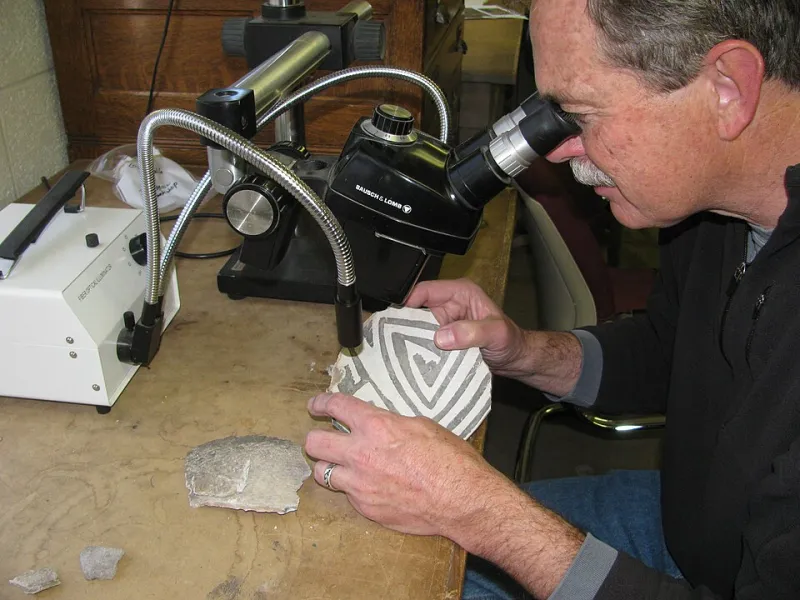
Photo: NPS Photo, Public domain, via Wikimedia Commons
Every discipline carries its share of embarrassing chapters, but few are as instructive—or as consequential—as archaeology's long entanglement with fabricated and misidentified evidence. The artifacts that never were, the skulls that did not mean what their discoverers claimed, the inscriptions that turned out to be forgeries: these are not mere footnotes. They shaped research agendas, influenced public policy, justified colonial hierarchies, and, in some cases, denied Indigenous communities their own documented histories. Understanding how false narratives took root is not an exercise in shaming the past. It is a necessary audit of how scientific institutions operate under pressure—and how they fail.
The Piltdown Affair: Prestige as a Blinding Agent
No episode in the history of paleoanthropology casts a longer shadow than the Piltdown Man. In 1912, fragments of a skull and jawbone recovered from a gravel pit in East Sussex, England, were presented to the Geological Society of London as evidence of a previously unknown early human ancestor. The specimen was christened Eoanthropus dawsoni—Dawson's Dawn Man—after amateur collector Charles Dawson, who had brought the material to light. For more than four decades, Piltdown Man occupied a contested but resilient place in the human evolutionary tree.
The fraud was not exposed until 1953, when a team of researchers applied fluorine dating, microscopic analysis, and X-ray examination to the original specimens. The results were unambiguous: the skull was that of a modern human, the jaw belonged to an orangutan, and the teeth had been deliberately filed and chemically stained to simulate age and wear. Someone—the identity of the forger remains debated to this day—had constructed a composite fake and introduced it into one of the world's most prestigious scientific institutions.
What allowed the deception to survive for four decades? Confirmation bias played a central role. Early twentieth-century British paleontologists expected to find evidence that humanity's largest brain had evolved first, before other anatomical changes. Piltdown fit that expectation almost too neatly. Dissenting voices—including those of American and French researchers who found the specimen anatomically inconsistent—were marginalized. Institutional prestige compounded the problem: the Natural History Museum in London had staked considerable reputation on the find, and revisiting that commitment carried real professional costs.
American Archaeology's Own Mythologies
While Piltdown unfolded across the Atlantic, American archaeology was generating its own body of problematic narratives, many of them rooted in racial ideology rather than outright forgery. The nineteenth and early twentieth centuries saw a proliferation of claims that the earthworks of the Ohio and Mississippi valleys—Hopewell mounds, Cahokia's platform structures, the geometric enclosures of the Newark Earthworks—could not have been constructed by the ancestors of living Indigenous peoples. The so-called "Mound Builder Myth" proposed instead a vanished white or Semitic race responsible for these monuments, conveniently erasing Native American achievement at a moment when federal policy was actively dispossessing Native nations of their lands.
This was not fringe speculation. It was endorsed by figures within the Smithsonian Institution and reproduced in popular literature for generations. The myth was not definitively dismantled until Cyrus Thomas's 1894 report for the Bureau of American Ethnology, which marshaled systematic excavation data to demonstrate the continuity between mound construction and the documented ancestors of contemporary tribes. Even so, the myth persisted in popular culture well into the twentieth century, illustrating how thoroughly a false narrative can outlast its scientific refutation when it serves broader ideological purposes.
More recent American cases are less dramatic but no less revealing. The so-called "Kennewick Man" controversy, which began in 1996 following the discovery of ancient skeletal remains along the Columbia River in Washington State, produced a cascade of competing interpretations, some of which leaned heavily on early, premature morphological assessments suggesting European or Polynesian ancestry. Later paleogenomic analysis published in 2015 demonstrated clear genetic affinity with contemporary Native American populations—findings that aligned with the longstanding oral traditions of the Umatilla and other tribes who had claimed ancestral connection to the remains from the outset.
The Mechanics of Mythmaking
Across these cases, certain structural patterns recur with striking regularity. First, there is the problem of the singular dramatic find: a single skull, a solitary inscription, one anomalous artifact. Archaeology's evidentiary standards are strongest when findings can be cross-validated against multiple independent lines of evidence. Isolated discoveries are inherently more vulnerable to misinterpretation—or manipulation.
Second, institutional gatekeeping has historically concentrated interpretive authority in the hands of a small number of credentialed researchers, often at elite universities or national museums. This concentration can slow the circulation of dissenting analysis and create structural disincentives for challenging high-profile claims. The career risks of publicly contesting a senior colleague's marquee discovery have, in numerous documented cases, delayed correction by years.
Third, and perhaps most perniciously, racial and nationalist ideologies have repeatedly shaped what researchers expected to find and therefore what they believed they had found. The Mound Builder Myth, the early misreadings of Kennewick Man's morphology, and the broader tendency to attribute monumental pre-Columbian construction in the Americas to hypothetical Old World migrants all reflect a prior ideological commitment that the evidence was then recruited to support.
What Modern Archaeology Is Doing Differently
The discipline has not been passive in confronting these legacies. Several structural reforms are actively reshaping how archaeological findings are validated and communicated. Open-access data repositories now allow researchers outside the original discovery team to independently assess raw data—from isotopic measurements to photogrammetric site models—without relying solely on published interpretations. Pre-registration of research hypotheses, borrowed from experimental psychology's replication crisis response, is gaining traction in some corners of the field, making it harder to retrofit a narrative onto findings after the fact.
The integration of Indigenous knowledge and tribal consultation into research design has also introduced forms of accountability that were entirely absent from earlier practice. When Native communities are partners rather than subjects, claims that contradict well-documented oral traditions face a higher evidentiary burden before gaining acceptance. This is not, as critics sometimes suggest, a concession to non-scientific authority. It is a recognition that oral traditions encode empirical observations accumulated across generations, and that dismissing them outright has historically served ideological rather than scientific ends.
Finally, there is growing momentum around what might be called institutional humility—the formal acknowledgment, in journal editorial policies and museum interpretive frameworks, that current conclusions are provisional and subject to revision. The Smithsonian's ongoing reassessment of its historical collections, including material gathered under ethically compromised circumstances, reflects a broader disciplinary reckoning with the conditions under which knowledge was produced.
The Lesson the Ground Keeps Teaching
Archaeology's false discoveries are not aberrations. They are diagnostic. Each one illuminates something about the social and institutional conditions under which science is practiced—the pressures that reward bold claims over cautious ones, the ideologies that shape what counts as plausible, the gatekeeping structures that protect error as readily as they protect rigor. The artifacts that never were are, in their own way, among the most informative objects in the discipline's history. They tell us not about the ancient past, but about the recent one—and about the work that remains to be done if the field is to earn the trust it asks of the communities whose histories it claims to recover.