Cataloged Into Obscurity: How Institutional Archives Buried Indigenous Scientific Achievement

Photo: Carol M. Highsmith, Public domain, via Wikimedia Commons
For well over a century, the standard narrative of scientific progress in North America treated Indigenous peoples largely as subjects of study rather than originators of knowledge. That framing was not accidental. A growing body of scholarship, accelerated by large-scale digitization projects at institutions ranging from the Smithsonian to regional land-grant universities, is revealing that the suppression of Indigenous intellectual achievement was, in many cases, a deliberate institutional outcome — written into the very architecture of how museums cataloged objects, how anthropologists structured field notes, and how academic journals selected which findings merited formal attribution.
The consequences of that suppression persist. When foundational records misidentify the source of an innovation, every subsequent citation compounds the original distortion. Undoing that damage requires archaeologists and archival scholars to work backward through layers of institutional documentation, a painstaking process that is only now becoming feasible at scale.
The Catalog as an Instrument of Erasure
Museum catalogs from the late nineteenth and early twentieth centuries were, on their surface, tools of organization. In practice, they encoded a set of assumptions about who could be considered a producer of knowledge. Objects recovered from Indigenous agricultural or engineering contexts were routinely classified under headings such as "primitive implements" or "pre-scientific artifacts," language that positioned them outside any recognizable tradition of systematic inquiry.
Dr. Sonya Atalay, a Chippewa-Ojibwe archaeologist and professor at the University of Massachusetts Amherst, has described this cataloging logic as a form of "epistemic displacement" — the institutional act of moving knowledge from one category of meaning to another without the consent or input of the people who generated it. A ceramic vessel used to administer a precisely measured botanical compound, for instance, might be logged simply as a "cooking pot," stripping it of its medical context entirely.
Recent work on the digitized field correspondence of early Bureau of American Ethnology researchers has made the mechanics of this process newly visible. Internal memoranda from the 1890s and early 1900s show supervisors instructing field workers to record Indigenous agricultural techniques as "adaptive behaviors" rather than "technologies" — a distinction that carried enormous weight in the taxonomies of the era, determining whether a practice would be analyzed as the product of rational design or merely of environmental conditioning.
Engineering Knowledge, Unacknowledged
The hydraulic systems constructed by the Hohokam of the Sonoran Desert represent one of the most extensively documented cases of misattributed engineering in North American archaeology. The canal networks, which irrigated hundreds of thousands of acres across what is now the Phoenix Basin, were recognized by early twentieth-century surveyors as sophisticated infrastructure. Yet published accounts from that period consistently framed the canals as evidence of "instinctive" responses to aridity rather than the products of deliberate hydraulic calculation.
Comparative analysis conducted by researchers at Arizona State University has since demonstrated that Hohokam canal gradients were engineered to within fractions of a degree over distances exceeding ten miles — a precision that required advanced surveying knowledge and iterative design refinement. The archival record, however, contains almost no documentation of the Indigenous engineers themselves. Names, roles, and methodologies were not recorded. What survives is the infrastructure; the intellectual history behind it was never written down in the first place, or was written down and subsequently reclassified.
This pattern recurs across disciplines. Ethnobotanical field notes from the early twentieth century frequently documented the effects of Indigenous medicinal compounds without recording the systematic knowledge frameworks that governed their preparation and application. The compound was extracted from the record; the science that produced it was left behind.
The Digitization Window
The current wave of archival digitization has created an unprecedented opportunity to revisit these institutional decisions. Collections that once required physical access to read are now searchable, cross-referenceable, and available to descendant communities who were historically excluded from the institutions that held them.
The Mukurtu platform, developed in collaboration with Indigenous communities in the United States and Australia, has become a significant vehicle for this work. By enabling communities to apply their own metadata frameworks to digitized materials, Mukurtu allows for the recontextualization of objects and documents that institutional catalogs had placed in misleading categories. A basket documented by a museum as a "storage container" might be recategorized within Mukurtu as an instrument used in a specific ceremonial agricultural practice — a designation that restores the object's relationship to an entire system of botanical and ecological knowledge.
At the Newberry Library in Chicago, an ongoing collaboration with tribal historic preservation officers from several Great Lakes nations is working through tens of thousands of pages of late nineteenth-century ethnographic correspondence, flagging instances where Indigenous informants' technical explanations were paraphrased or omitted in published accounts. The preliminary findings suggest that the gap between what was recorded in the field and what eventually appeared in print was substantial — and consistently skewed in the direction of diminishing Indigenous analytical sophistication.
Restoring the Intellectual Record
The methodological challenge facing contemporary archaeologists is not simply one of identification. It is one of reconstruction. When the original documentation was structured to obscure, the evidentiary trail is thin by design. Researchers are increasingly combining material analysis — examining the physical objects themselves with techniques unavailable to earlier scholars — with oral historical accounts and Indigenous knowledge frameworks to reconstruct intellectual histories that the archival record was built to prevent.
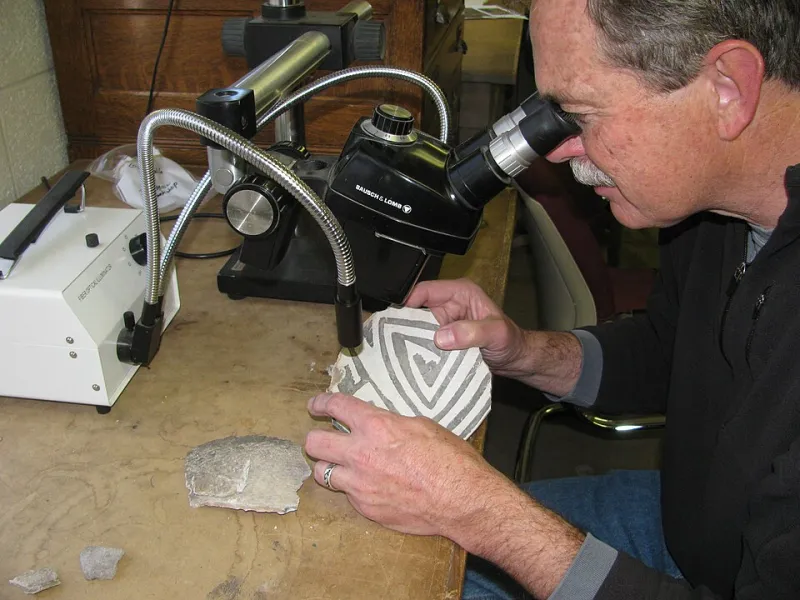
Isotopic and residue analysis of ceramic assemblages, for example, can now identify the specific botanical compounds a vessel was used to process, providing an independent evidentiary basis for claims about medicinal or agricultural knowledge that the written record denied. LiDAR surveys of known agricultural sites are revealing the geometric precision of field layouts in ways that earlier ground-level surveys could not capture, offering material evidence of sophisticated spatial planning.
Perhaps most significantly, descendant communities are being recognized not merely as stakeholders in this process but as primary intellectual contributors to it. The knowledge systems that institutional archives worked to suppress did not disappear; they were maintained in living communities. Contemporary Indigenous scholars and knowledge holders are bringing those frameworks directly into the archaeological research process, providing interpretive context that no amount of archival excavation alone could supply.
A Reckoning the Discipline Cannot Defer
The archaeology of the archive is, in one sense, a deeply uncomfortable enterprise. It requires the discipline to examine its own foundational documents as primary evidence of institutional harm rather than neutral repositories of fact. It demands that researchers treat the absence of attribution as data — as deliberate, consequential, and recoverable.
What the digitized record is making increasingly difficult to dispute is that the erasure of Indigenous scientific achievement was not simply the passive product of cultural bias. It was, in many documented instances, an active institutional choice — made in memoranda, enforced in cataloging guidelines, and reproduced across generations of scholarship that drew on tainted primary sources without questioning their construction.
Reversing that legacy will not happen through archival work alone. It will require sustained changes to how attribution is practiced in contemporary archaeological publication, how descendant communities are compensated for their intellectual contributions, and how the discipline trains the next generation of researchers to read the silences in a document as carefully as its text. The archive, it turns out, records not only what was found — but what those who controlled the record chose to make disappear.