Digital Breadcrumbs: How Looters' Own Online Activity Is Fueling the Recovery of Stolen Cultural Heritage
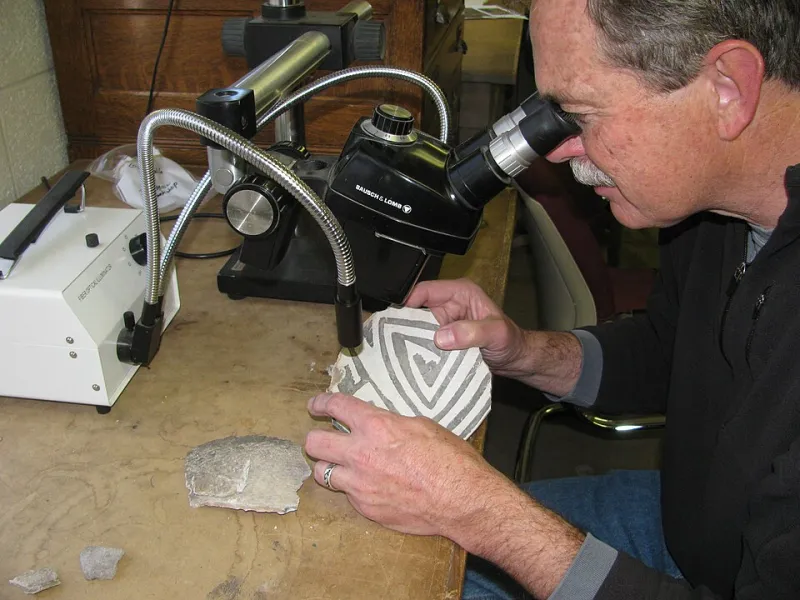
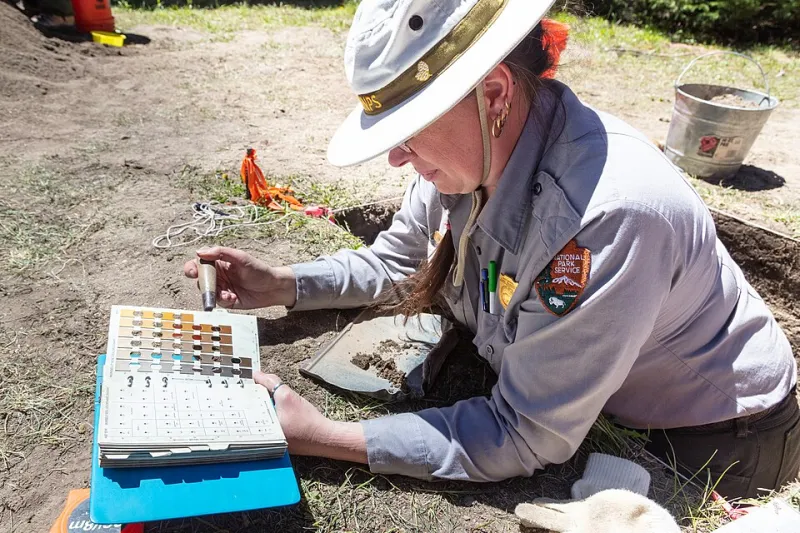
Photo: NPS Photo, Public domain, via Wikimedia Commons
For much of the twentieth century, the illicit antiquities trade operated through whispered networks—private dealers, unscrupulous auction houses, and collectors who asked few questions about provenance. Artifacts torn from their archaeological context disappeared into warehouses, estate collections, and overseas markets with minimal documentation and virtually no accountability. The digital revolution did not eliminate this shadow economy. In many respects, it accelerated it. Yet in a development that few could have predicted, the same platforms that facilitated the expansion of artifact trafficking have become some of the most productive investigative tools available to archaeologists, federal agents, and heritage protection specialists.
The mechanism is almost counterintuitive in its simplicity: looters document their own crimes.
The Self-Incriminating Archive
Among those who dig illegally at archaeological sites across the American Southwest, the Great Plains, and the Mississippi River Valley, a culture of documentation has flourished alongside the looting itself. Photographs of freshly excavated ceramic vessels, stone tools, and human remains are routinely posted to Facebook groups, Instagram accounts, and dedicated forums where collectors congregate. These images serve as proof of authenticity, social currency within looter communities, and increasingly, as marketing material for private sales.
What many of these individuals fail to appreciate is the evidentiary richness embedded in a single photograph. Modern smartphones automatically embed EXIF metadata into image files—data that can include the precise GPS coordinates of the location where the photo was taken, the date and time of capture, and the device model used. When a looter photographs a ceramic bowl at the precise moment of its extraction from the earth, they may be simultaneously recording the exact location of the site they have just damaged.
Federal agents working with the FBI's Art Crime Team and archaeologists affiliated with the Bureau of Land Management have confirmed that EXIF data analysis has become a standard component of heritage crime investigations. In multiple cases across Utah, Colorado, and New Mexico—states that contain dense concentrations of ancestral Puebloan and other pre-contact sites on federally protected land—this metadata has allowed investigators to pinpoint looting events to within meters, corroborate witness accounts, and build prosecutable cases under the Archaeological Resources Protection Act of 1979.
Marketplaces as Monitoring Stations
Beyond social media platforms, online marketplaces have emerged as both a vector for artifact trafficking and a surveillance opportunity. eBay, Craigslist, and a constellation of specialized antiquities forums regularly host listings for items that bear the hallmarks of recently looted material: no documented provenance, vague descriptions referencing "family collections" or "estate finds," and pricing inconsistent with legitimate market channels.
Archaeologists working with organizations such as the Antiquities Coalition and university-based cultural property law clinics have developed systematic approaches to monitoring these platforms. Trained researchers use keyword searches, image recognition tools, and cross-referencing databases of previously documented artifacts to flag suspicious listings. When a match is identified—a painted pottery shard, for instance, whose design vocabulary corresponds to a known site in the Four Corners region—the information is forwarded to law enforcement for follow-up.
The 2020 prosecution of a Utah man for the illegal excavation and sale of artifacts from Bears Ears National Monument illustrated how this pipeline functions in practice. Investigators documented his activity through a combination of social media posts, online sale records, and EXIF metadata, ultimately recovering dozens of objects and securing a federal conviction. The case was notable not only for its outcome but for the degree to which the defendant's own digital behavior constituted the evidentiary foundation of the prosecution.
Tribal Nations and the Identification Problem
Recovery, of course, is only the first challenge. Once artifacts are seized by law enforcement, the question of identification and repatriation must be addressed. This is where the collaboration between archaeologists, tribal historic preservation officers, and federal agencies becomes indispensable.
Under the Native American Graves Protection and Repatriation Act, federally recognized tribes have legal standing to claim ancestral human remains, funerary objects, and items of cultural patrimony. However, exercising that right requires demonstrating cultural affiliation—a process that depends heavily on comparative archaeological analysis, oral historical traditions, and material culture expertise. Archaeologists play a central role in this evidentiary chain, examining recovered objects alongside tribal representatives to reconstruct their likely origins and cultural context.
Social media documentation, paradoxically, can assist this process. Photographs posted by looters sometimes capture objects in situ—still resting in the soil matrix from which they were extracted—providing contextual information that would otherwise be permanently lost. Ceramic assemblages, spatial relationships between objects, and stratigraphic context are all data points that can inform cultural affiliation assessments, even when the photographs were taken by someone with no archaeological training and no intention of contributing to the scholarly record.
Cryptocurrency, Encryption, and the Evolving Threat
Investigators are candid about the limitations of current approaches. The same technological evolution that created new investigative opportunities has also furnished looters and traffickers with countermeasures. Cryptocurrency transactions leave no traditional financial paper trail. Encrypted messaging applications allow dealers to communicate outside the visibility of conventional monitoring. Dark web marketplaces operate beyond the reach of standard platform-based surveillance.
More sophisticated trafficking networks have adapted accordingly, stripping metadata from images before posting, conducting transactions off-platform, and routing shipments through multiple international jurisdictions to obscure origins. The global e-commerce infrastructure that enables legitimate cross-border commerce also enables the movement of illicit cultural property with relative ease.
Researchers at several American universities are currently developing machine learning tools designed to identify looted artifacts from photographs alone—analyzing stylistic attributes, surface characteristics, and iconographic elements against databases of documented material. These systems, while still in early development, represent a potential response to the metadata-stripping problem, offering a form of object-level identification that does not depend on the cooperation of the person who took the photograph.
A Structural Shift in Heritage Crime Investigation
What the current moment represents, taken broadly, is a structural shift in the investigative landscape surrounding heritage crime in the United States. For decades, the primary challenge was visibility: looting occurred in remote areas, artifacts moved through opaque private networks, and the evidentiary record was thin. Digital platforms have not solved this problem, but they have introduced new points of friction into a previously frictionless system.
The archaeologists and law enforcement professionals working at this intersection are careful not to overstate the impact. Prosecutions under the Archaeological Resources Protection Act remain relatively infrequent given the scale of looting activity, and the international dimensions of artifact trafficking continue to outpace the jurisdictional reach of domestic law enforcement. Recovered artifacts, even when successfully repatriated, represent a fraction of what is lost each year.
Nevertheless, the evidentiary possibilities opened by digital documentation mark a genuine development in the long and largely frustrating effort to protect archaeological heritage. The past, it turns out, can sometimes be recovered through the very technologies that those who plunder it use to celebrate their finds.