What Is No Longer There: Reading Colonial Violence and Environmental Destruction Through the Archaeology of Erased Places
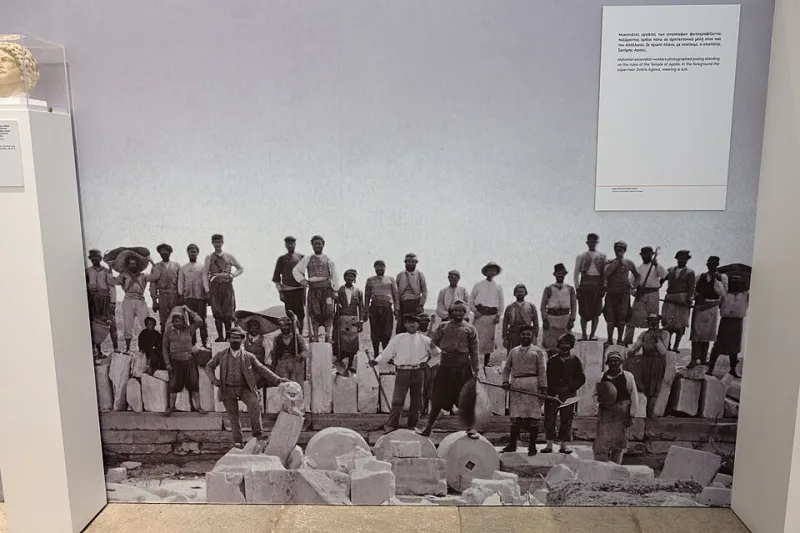
Photo: Zde, CC BY-SA 4.0, via Wikimedia Commons
Archaeology is generally understood as the study of what survives. Potsherds, postholes, lithic scatters, faunal remains — the discipline has built its interpretive frameworks around material persistence. But a growing body of scholarship is confronting an uncomfortable epistemological challenge: what do we do when the most historically significant thing about a site is that it was deliberately made to disappear?
Across North America, researchers are turning their attention to a category of site that resists conventional analysis — places where colonization, industrialization, or targeted violence left behind not a legible assemblage of objects but a structured absence. Far from rendering these locations archaeologically mute, their destruction has, paradoxically, generated its own evidentiary record. Learning to read that record is one of the more demanding — and morally consequential — frontiers in contemporary archaeological practice.
The Evidence Encoded in Destruction
When structures are burned, they do not simply vanish. Fire leaves behind a forensic signature: charred architectural timbers that preserve construction techniques, carbonized organic materials suitable for radiocarbon dating, and heat-fractured artifacts whose spatial distribution can indicate whether destruction was accidental, deliberate, or staged. At sites associated with colonial-era conflicts in the American Southwest and Great Plains, archaeologists have documented burning patterns inconsistent with domestic hearths or accidental ignition. The directionality of char, the clustering of collapsed roof beams, and the presence of projectile points embedded in structural elements collectively suggest organized, externally imposed destruction — a material record of violence that written colonial accounts often minimized or omitted entirely.
Similarly, the systematic removal of artifacts — whether by colonial administrators confiscating ceremonial objects, by looters extracting sellable items, or by early twentieth-century institutions collecting human remains under the guise of scientific inquiry — leaves detectable traces. Disturbed stratigraphy, anomalous gaps in artifact distributions, and the presence of empty pedestals or display niches within otherwise intact contexts all signal deliberate extraction. When cross-referenced with museum acquisition records, missionary inventories, and federal agency correspondence, these material voids can be mapped onto specific historical actors and events.
Case Studies in Structured Erasure
The archaeology of erased places draws on case studies that span the continent and span centuries of colonial engagement.
In the mid-Atlantic region, researchers studying the sites of seventeenth-century Algonquian villages have documented a recurring pattern: settlements that appear in early European maps and missionary records but yield only shallow, fragmentary archaeological signatures. Soil chemistry in these locations frequently shows evidence of sustained occupation — elevated phosphate concentrations, anthrosols indicative of long-term habitation — yet surface assemblages are sparse and stratigraphic profiles truncated. The most plausible interpretation is that these communities were forcibly relocated, their material culture removed or destroyed, and their settlements subsequently plowed under by colonial agricultural expansion. The land remembers what the documents preferred to forget.
Further west, the archaeology of California mission sites has increasingly focused on the spaces where Indigenous neophytes lived, worked, and died rather than on the monumental church structures that have historically attracted scholarly and tourist attention alike. Excavations adjacent to mission compounds have recovered evidence of covert material practices — non-Christian burial goods interred beneath mission-approved grave markers, modified European ceramic vessels repurposed in ways that suggest the persistence of pre-contact foodways — that speak to cultural resilience enacted under conditions of extreme coercion. Here, absence and concealment are themselves a form of evidence: communities suppressing visible expressions of identity in order to preserve them.
In the industrial Midwest and South, the archaeology of African American communities displaced by urban renewal programs in the mid-twentieth century presents a different but structurally analogous challenge. Neighborhoods systematically demolished between the 1950s and 1970s — often under the authority of federally funded redevelopment initiatives — left behind subsurface foundations, privies, and utility corridors that persist beneath parking lots and highway interchange ramps. Archaeological survey in cities including Chicago, Nashville, and St. Louis has begun recovering these buried neighborhoods, correlating physical remains with Sanborn fire insurance maps, city directories, and oral histories to reconstruct community geographies that official urban planning records rendered invisible.
Methodological Frameworks for Studying What Is Gone
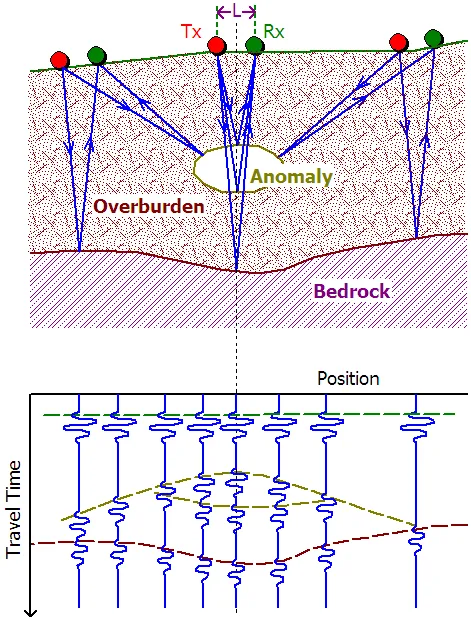
Interpreting the archaeology of absence demands methodological pluralism. No single technique is sufficient. Ground-penetrating radar and magnetometry can identify subsurface anomalies consistent with former structures even where surface expression has been entirely eliminated. Micromorphological analysis of sediment profiles can distinguish natural depositional sequences from those disrupted by mechanical clearing or deliberate infilling. Archival archaeology — the systematic cross-referencing of material findings with colonial administrative records, land survey documents, and ecclesiastical archives — is essential for contextualizing physical evidence within specific historical processes of dispossession.
Critically, descendant community engagement is not merely an ethical obligation in this work but an analytical necessity. Oral traditions frequently encode spatial knowledge about destroyed or relocated sites that no archive preserves. Community members may hold family records, photographs, or material objects that directly illuminate what archaeological contexts can only partially reconstruct. Several recent projects have formalized this collaboration through co-investigative frameworks in which descendant communities hold decision-making authority over research design, data interpretation, and publication — a structural shift that reflects both ethical accountability and epistemological humility.
Absence as Argument
The interpretive stakes of this work extend beyond any individual site. When archaeologists demonstrate that destruction was systematic rather than incidental — that colonial violence and industrial displacement followed patterns replicable across regions, periods, and communities — they provide evidentiary grounding for claims that have long been made in oral tradition and community memory but dismissed in institutional contexts as anecdotal.
This is not advocacy masquerading as science. It is the application of rigorous analytical methods to a category of evidence that the discipline historically undervalued. The burned village, the emptied ceremonial space, the bulldozed neighborhood: each encodes information about the forces that produced it. Reading that information carefully, and honestly, is among the most consequential contributions archaeology can make to the broader project of historical reckoning in the United States.
The discipline has spent generations perfecting its ability to reconstruct the past from what endures. The next frontier may lie in what was taken away.