Marks on Stone, Messages Across Nations: Reassessing Indigenous Symbolic Communication in Pre-Contact Eastern North America
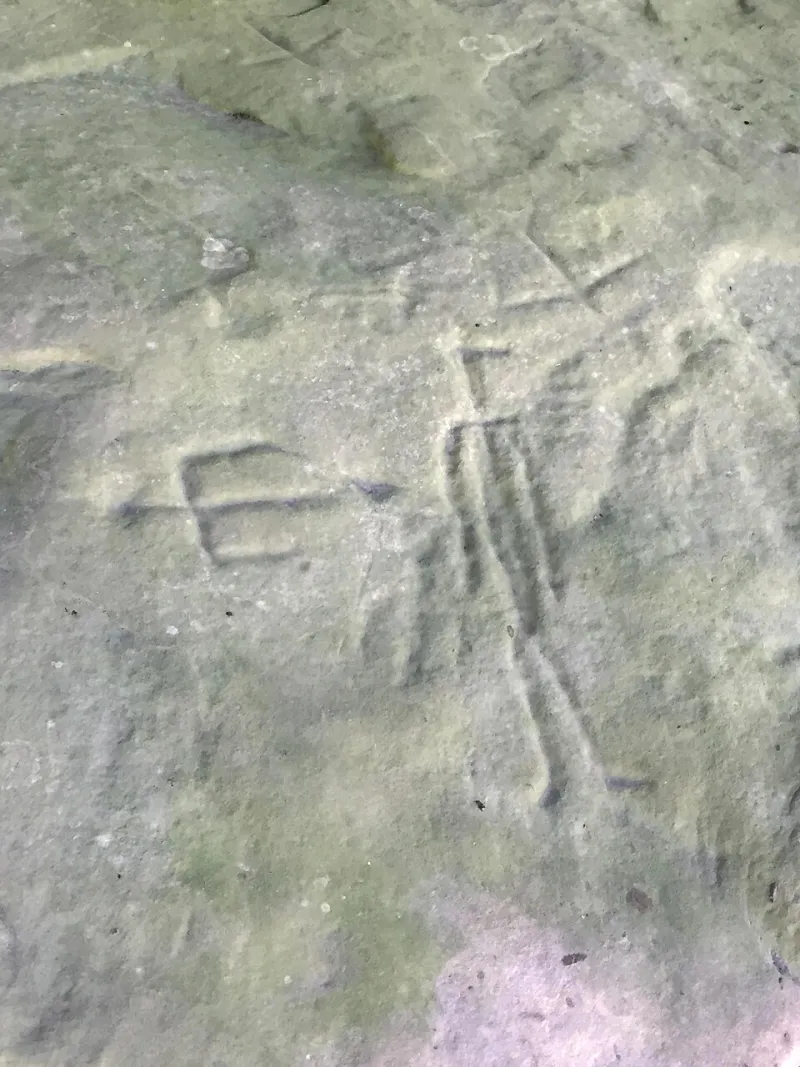
Photo: Drdpw, CC BY-SA 4.0, via Wikimedia Commons
The question of whether pre-contact Indigenous peoples of eastern North America possessed writing—or something functionally analogous to it—has historically been answered in the negative with a confidence that, on closer examination, reveals more about the assumptions of nineteenth- and early twentieth-century scholarship than about the actual archaeological record. A quieter but increasingly persuasive body of research is now complicating that consensus. Drawing on advances in epigraphy, comparative semiotics, and the reanalysis of petroglyphic sites from the Ohio Valley to the Atlantic seaboard, a new generation of scholars is arguing that many Eastern Woodlands societies employed sophisticated symbolic systems that served communicative, mnemonic, and administrative functions comparable—if not identical—to what Western academic tradition has historically reserved for the category of "writing."
Defining the Problem: What Counts as Writing?
Any serious engagement with this question must begin with a definitional one. The term "writing" carries considerable ideological baggage in the Western scholarly tradition, having been defined in ways that have often, whether intentionally or not, excluded non-alphabetic and non-logographic systems from full recognition. The linguist and writing-systems scholar John DeFrancis famously restricted the definition to systems that encode spoken language; by that standard, many of the symbolic systems under discussion here would not qualify. But a growing number of researchers in semiotics and cognitive archaeology argue that such definitions are too narrow, that they privilege one model of symbolic communication—the phonographic—at the expense of others that may be equally systematic and socially functional.
The concept of "proto-writing," or semasiographic communication, offers a more productive analytical frame for the Eastern Woodlands evidence. Semasiographic systems convey meaning through visual symbols without necessarily encoding the phonology of a specific spoken language. They can record information, coordinate social action, and transmit knowledge across time and space. Whether they constitute "writing" in the strictest sense is, for archaeological purposes, less important than whether they functioned as structured, shared, and learnable symbolic codes—and the evidence increasingly suggests that several Eastern Woodlands traditions did exactly that.
The Petroglyphic Record Reconsidered
The Eastern Woodlands contains a substantial and geographically dispersed corpus of carved rock imagery, ranging from the well-documented petroglyph sites of the Ohio River drainage—including the famous Alligator Effigy Mound complex and associated incised stones in southern Ohio—to less-studied concentrations in the Connecticut River Valley, the Delaware Water Gap corridor, and the mountain hollows of western Virginia and North Carolina. Early antiquarians and even mid-twentieth-century archaeologists frequently catalogued these carvings as religious iconography or territorial markers, categories that implicitly positioned them as pre-communicative or communicatively simple.
More recent epigraphic analysis, informed by the systematic comparison of symbol sets across geographically separated sites, is producing a different picture. Researchers working with the rock art archive maintained by the American Rock Art Research Association (ARARA) have identified recurring symbol clusters—combinations of geometric forms, anthropomorphic figures, and zoomorphic motifs—that appear with sufficient regularity across sites separated by hundreds of miles to suggest shared symbolic conventions rather than independent invention. The distribution of these clusters corresponds in several cases to known trade and exchange networks of the Hopewell tradition (roughly 100 BCE to 500 CE), raising the possibility that the symbols functioned partly as a medium of inter-community communication across linguistic boundaries.
Wampum, Birchbark, and Perishable Media
One of the most significant methodological challenges in this area of research is what might be called the perishability problem. The archaeological record of the Eastern Woodlands is heavily biased toward durable materials—stone, fired clay, copper, and shell—while the organic media on which many symbolic systems were almost certainly recorded have not survived. Birchbark, hide, and wood were all used as surfaces for symbolic inscription in the historic period, and there is no compelling reason to assume that pre-contact practices were fundamentally different. The implication is that the surviving petroglyphic and ceramic record represents only a fraction—possibly a small fraction—of the total symbolic output of Eastern Woodlands societies.
Wampum belts present a related and particularly instructive case. Long recognized as politically and diplomatically significant objects among Haudenosaunee (Iroquois Confederacy) and Algonquian nations, wampum belts encode information through the patterned arrangement of purple and white shell beads in ways that trained readers could interpret with specificity. Colonial-era accounts confirm that wampum belts functioned as treaties, historical records, and diplomatic credentials—communicative functions that are, by any reasonable definition, analogous to those served by writing in other cultural contexts. The pre-contact antiquity of wampum as a communicative medium, rather than simply a prestige object, is a subject of active scholarly debate, but the balance of evidence suggests that its use as an information-bearing system predates European contact by at least several centuries.
Why These Systems Were Overlooked
The historiography of this oversight is worth examining directly, because the reasons for it are not purely intellectual. The denial of Indigenous literacy and sophisticated communication was, in the colonial and post-colonial American context, also a political act. Legal frameworks for land dispossession, from the Doctrine of Discovery onward, rested in part on characterizations of Indigenous peoples as lacking the markers of civilization that European legal and philosophical tradition had identified as grounds for territorial sovereignty. Writing—or its absence—was among those markers. Acknowledging that Eastern Woodlands nations possessed structured communication systems would have complicated, though not necessarily invalidated, those legal and ideological frameworks.
Within academic archaeology specifically, the oversight was compounded by disciplinary specialization. Epigraphy and the study of writing systems developed largely within classical and Near Eastern studies, and its practitioners rarely engaged with North American material. Meanwhile, North Americanist archaeologists, trained in a tradition that treated the question of Indigenous writing as settled, had little institutional incentive to reopen it. The result was a self-reinforcing consensus sustained less by empirical closure than by the absence of sustained interdisciplinary inquiry.
New Directions and Ongoing Debates
The current scholarly landscape is characterized by genuine disagreement, which is itself a sign of productive intellectual ferment. Some researchers, drawing on the work of scholars like Genevieve von Petzinger in the domain of Paleolithic cave art, are applying quantitative symbol-frequency analysis to Eastern Woodlands petroglyphic corpora in an effort to determine whether the symbol inventories show the kind of structured redundancy that distinguishes systematic communication from decorative expression. Preliminary results from sites in the Susquehanna River Valley and the New River Gorge area of West Virginia suggest that certain symbol combinations appear far more frequently than chance would predict—a finding consistent with, though not conclusive of, systematic communicative use.
Other researchers are prioritizing collaboration with tribal historic preservation offices and Indigenous knowledge keepers, whose oral traditions sometimes preserve interpretive frameworks for carved symbols that academic epigraphy has no independent means of recovering. This approach carries its own methodological complexities—oral traditions are not static archives, and the relationship between contemporary Indigenous interpretive practice and pre-contact symbolic meaning is not straightforward—but it has already yielded significant reinterpretations at several sites in the Great Lakes region and the Carolinas.
What is becoming clear is that the Eastern Woodlands of pre-contact North America was not a region without letters, but a region whose letters were carved in stone, woven in shell, and inscribed on materials the centuries have not preserved. Reading them demands new methodological tools, genuine interdisciplinary collaboration, and a willingness to question assumptions that have shaped the field for far too long.