Partners in the Past: The Growing Role of Indigenous Knowledge in Shaping Archaeological Practice
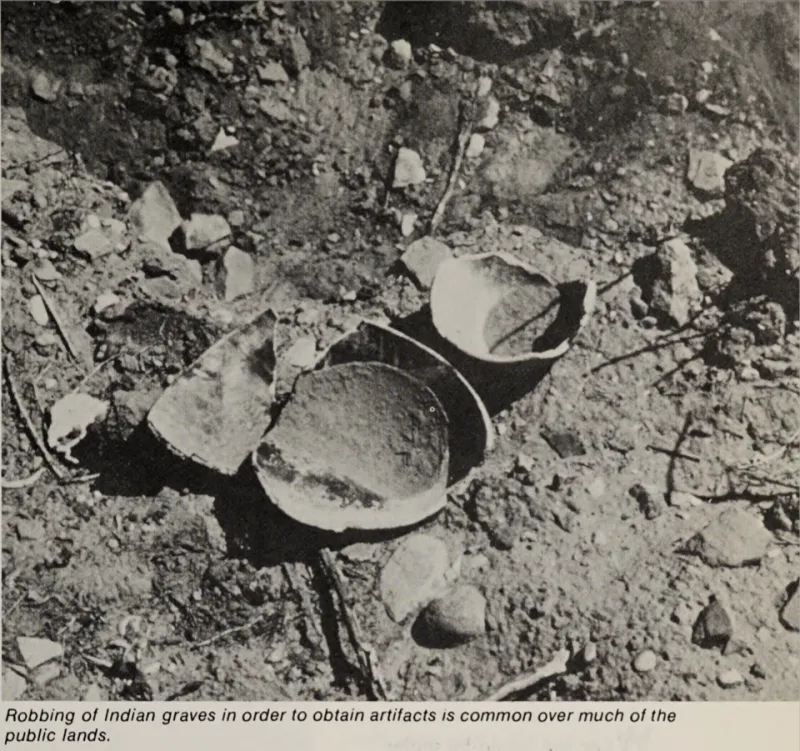
Photo: U.S. Department of the Interior, Bureau of Land Management, Public domain, via Wikimedia Commons
Archaeology has always claimed to speak for the dead. For most of the discipline's institutional history in the United States, that claim went largely unchallenged — at least within academic circles. Researchers excavated, analyzed, published, and interpreted with minimal input from the living descendants of the people whose material remains they studied. The communities most directly connected to those remains were, more often than not, observers at best and obstacles at worst.
That arrangement is changing. Slowly, unevenly, and sometimes contentiously, American archaeology is renegotiating its relationship with Native American communities. What is emerging from that renegotiation is not simply a more politically palatable research environment — it is, in a growing number of documented cases, a more epistemically rigorous one. When Indigenous knowledge holders engage as genuine intellectual partners rather than as consultants to be managed, the resulting interpretations of the past are frequently more nuanced and more accurate than those produced by Western scientific methodology alone.
The Legislative Foundation
Any account of Indigenous-archaeologist collaboration in the United States must begin with the Native American Graves Protection and Repatriation Act of 1990. NAGPRA, as it is universally known in the field, established federal requirements for the repatriation of human remains, funerary objects, and items of cultural patrimony held by institutions receiving federal funding. It also granted Native American tribes formal authority over the treatment of ancestral remains encountered during federally permitted ground disturbance.
NAGPRA did not create collaboration — it created a legal framework within which collaboration became necessary. Institutions that had previously operated without meaningful tribal consultation were now required to engage. The quality and depth of that engagement varied enormously, and continues to do so. Some institutions approached compliance as a bureaucratic obligation to be minimized; others recognized it as an opportunity to build genuinely productive research relationships. The difference in outcomes between these two orientations has been stark.
What Indigenous Knowledge Actually Contributes
The skeptical position — still encountered in some corners of the discipline — holds that oral traditions are too temporally imprecise and too subject to narrative drift to serve as reliable archaeological data. This position has been substantially weakened by a series of high-profile cases in which Indigenous oral accounts proved to contain accurate information about specific past events, landscape features, and ecological conditions that the archaeological or geological record subsequently confirmed.
The Confederated Tribes of the Umatilla Indian Reservation in Oregon maintained oral traditions describing a catastrophic flood in the Columbia River Basin. Those traditions were initially dismissed by geologists investigating the region's Pleistocene history. The subsequent scientific recognition of the Missoula Floods — a series of catastrophic glacial outburst floods that transformed the Columbia Plateau at the end of the last Ice Age — retroactively validated the broad accuracy of those accounts across timescales of more than ten thousand years.
In the Southeast, Cherokee oral traditions referencing specific mountain passes, river confluences, and settlement locations have repeatedly guided archaeologists toward productive survey areas that conventional predictive models had not prioritized. In the Great Plains, Lakota and Cheyenne knowledge of bison behavior patterns and seasonal movement has informed interpretations of bison kill sites in ways that purely taphonomic analysis could not fully achieve on its own.
Case Study: The Wampanoag and Plimoth Patuxent
The ongoing collaboration between the Wampanoag Tribe of Gay Head (Aquinnah) and Mashpee Wampanoag Tribe and researchers working at the Plimoth Patuxent site in Massachusetts offers a concrete example of what substantive partnership can look like in practice. Rather than limiting tribal involvement to consultation on repatriation matters, project researchers have integrated Wampanoag knowledge keepers into site interpretation processes from the outset.
The result has been a materially different account of seventeenth-century contact-period life than the one that had been constructed from English documentary sources alone. Wampanoag oral and cultural knowledge has illuminated the spatial logic of village organization, the significance of specific landscape features to ceremonial practice, and the nature of pre-contact agricultural management in ways that the artifact assemblage alone could not have revealed. The published interpretations from this collaboration are more complex and more credible than their predecessors.
The Tension Between Frameworks
Collaboration is not without friction, and it would be intellectually dishonest to suggest otherwise. The epistemological commitments of Western scientific archaeology and those of many Indigenous knowledge traditions are not always compatible, and the effort to integrate them productively requires sustained negotiation rather than the assumption that synthesis is always possible.
One persistent tension concerns the treatment of the dead. Archaeological convention holds that human skeletal remains are data — biological records that can yield information about diet, disease, migration, and kinship when subjected to appropriate analytical methods. Many Native American communities hold that ancestral remains are not data but relatives, and that their disturbance, regardless of the scientific information it might yield, constitutes a violation of obligations owed to the deceased.
This is not a disagreement that can be resolved by appealing to methodological rigor. It is a disagreement about what the past is for and who has the authority to engage with it. Researchers who have navigated this tension most successfully have done so not by subordinating one framework to the other but by developing project-specific protocols that reflect genuine negotiation — sometimes forgoing certain analyses, sometimes finding alternative methods that satisfy both scientific objectives and community ethical requirements.
Tribal Historic Preservation Offices and the Institutionalization of Partnership
One of the most significant structural developments of the past three decades has been the growth of Tribal Historic Preservation Offices, or THPOs. Established under the National Historic Preservation Act, THPOs give federally recognized tribes formal authority over cultural resource management decisions within their areas of interest, including the review of federal undertakings that may affect archaeological sites.
As of 2024, more than two hundred tribes have established THPOs, and the number continues to grow. These offices have professionalized tribal engagement with the archaeological and cultural resource management sectors, producing a cohort of Indigenous practitioners who are fluent in both Western archaeological methodology and the cultural knowledge systems of their communities. Their presence in the field has accelerated the shift toward genuine collaboration by ensuring that tribes are not merely reacting to proposals generated by outside researchers but actively shaping research agendas from positions of institutional authority.
Toward a More Complete Record
The most compelling argument for collaborative archaeology is ultimately not ethical but empirical. The archaeological record of North America is incomplete in ways that Western methodology alone cannot fully remedy. Oral traditions, place-name systems, ecological knowledge, and ceremonial practice encode historical information that does not survive in the material record. When that information is excluded from the interpretive process, the resulting accounts of the past are impoverished — not merely politically but factually.
The discipline is not yet where it needs to be. Meaningful collaboration remains the exception rather than the norm, and the legacy of extractive, community-indifferent research still shapes institutional cultures at many universities and agencies. But the direction of travel is clear, and the evidence that collaborative approaches produce better archaeology is accumulating. The past belongs to everyone descended from it. The discipline that claims to study it most rigorously should be the last to resist that fact.