What Was Never Found: How the Strategic Reading of Missing Artifacts Is Rewriting North American Prehistory
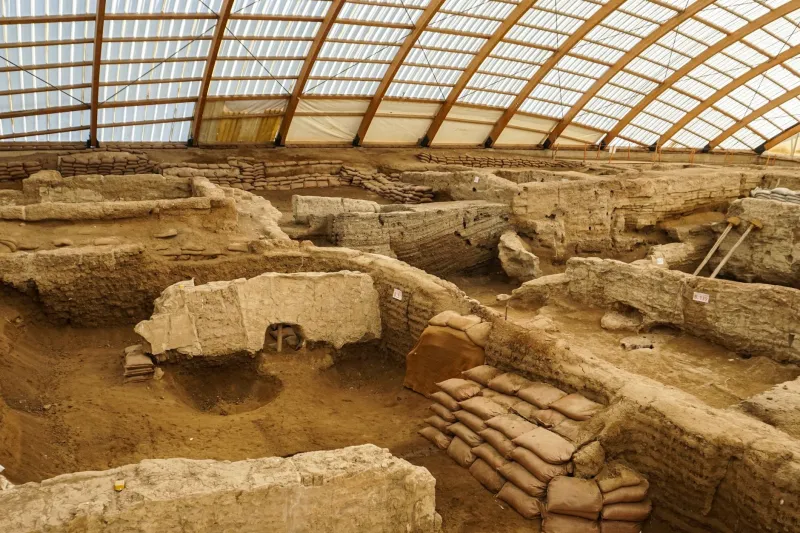
Archaeology has long been understood as the discipline of recovery—the careful extraction of objects from the earth and the reconstruction of human behavior from what survives. But a growing body of scholarship is inverting that premise. Some of the field's most consequential recent insights have emerged not from what researchers found at a site, but from what they expected to find and did not. The deliberate analysis of absence, once treated as a methodological dead end, has become one of the more intellectually generative frontiers in North American prehistoric research.
The challenge, of course, is distinguishing meaningful absence from the ordinary incompleteness of the archaeological record. Artifacts decay, sites erode, and excavations are never total. Recognizing a significant gap requires a framework rigorous enough to separate the informative void from the merely missing.
Building an Expectation: The Statistical Foundation of Absence Analysis
Before an archaeologist can identify what is conspicuously absent, they must first establish what should reasonably be present. This is where quantitative methods have transformed the field. Researchers draw on regional comparative datasets, site-type classifications, and assemblage modeling to generate probabilistic expectations for a given site's material composition. When a site's actual inventory falls statistically outside those expectations—when a category of artifact appears at a rate far below what similar sites in the same cultural horizon consistently produce—the discrepancy becomes analytically meaningful.
Settlement pattern studies offer a complementary lens. By mapping the spatial distribution of sites across a landscape and correlating those distributions with artifact concentrations, archaeologists can identify functional zones where certain object types should logically cluster. A domestic hearth assemblage lacking food-processing tools, or a probable storage area devoid of ceramic containers, raises questions that a purely descriptive inventory would never prompt.
Dr. Sissel Schroeder's research at Mississippian-period sites in the American Midwest illustrates this approach with particular clarity. Comparative analysis of platform mound assemblages revealed that certain prestige goods—marine shell ornaments, copper panpipes, and specific categories of effigy ceramics—appeared with high regularity at most elite residential contexts but were systematically absent at others. The pattern did not reflect differential preservation. It reflected differential removal: objects extracted before site abandonment, almost certainly as part of structured ritual protocols governing the decommissioning of sacred space.
Ritual Removal and the Archaeology of Intentional Emptiness
The concept of structured deposition has long been accepted in European prehistoric archaeology, but its inverse—structured removal—has received comparatively little systematic attention in North American contexts. Yet the evidence for deliberate object extraction at indigenous sites is substantial, and the interpretive implications are significant.
At the Cahokia site complex in present-day Illinois, excavations of several sub-mound deposits revealed prepared clay floors and post molds consistent with substantial architectural investment, yet the associated artifact assemblages were strikingly sparse. The spatial patterning of what remained suggested that the emptiness was not the product of looting or erosion. Objects had been taken away with the same care that others were placed. Researchers have interpreted this as evidence of ceremonial closure practices—the purposeful clearing of ritual space in ways that encoded meaning in the act of removal itself.
Similar patterns have been documented at Hopewell ceremonial centers in Ohio, where the interiors of geometric earthwork enclosures yield artifact densities far below what the scale and labor investment of the constructions would predict. The working hypothesis among several researchers is that these spaces were intentionally kept materially sparse as a function of their sacred status—that emptiness was itself a kind of architectural statement.
Colonial Contact and the Archaeology of Disrupted Assemblages
Perhaps the most historically urgent application of absence analysis concerns the period of European contact and its immediate aftermath. The disruption of indigenous material culture during the sixteenth through eighteenth centuries was profound, and the archaeological record of that disruption is complex. Trade goods appear; traditional craft technologies decline; site hierarchies collapse or reorganize. But the absences tell a more nuanced story than the presences alone.
At contact-period sites across the Great Lakes region, researchers have noted the near-total disappearance of certain categories of ceremonial objects from domestic and mortuary contexts at precisely the historical moment when documentary sources record intensifying missionary activity. The objects did not simply stop being made. Ethnohistorical records confirm their continued manufacture. They stopped being deposited in archaeologically recoverable contexts—buried with the dead, placed in structured caches, incorporated into domestic ritual. The inference is that indigenous communities, under pressure from colonial religious authorities, relocated these practices in ways that left no durable material trace, or deliberately obscured them from contexts where European observers might encounter them.
This finding has direct implications for how archaeologists interpret the apparent decline of certain cultural traditions during the contact period. What looks, in the material record, like the disappearance of a practice may in fact represent its strategic concealment—a form of cultural resistance encoded in absence rather than presence.
Trade Networks Mapped Through What Didn't Circulate
Absence analysis has also yielded fresh perspectives on pre-Columbian exchange systems. Obsidian sourcing studies across the American Southwest and Great Plains have long documented the remarkable geographic reach of indigenous trade networks by tracking where specific raw material signatures appear. But researchers have begun asking an equally productive question: where do these materials conspicuously fail to appear, given what we know about the networks that connected those regions?
In several cases, the non-distribution of high-value exchange goods across sites that were clearly embedded in broader interaction spheres points toward socially regulated access—evidence that certain communities controlled the flow of prestige materials and deliberately excluded others. The boundaries of those exclusion zones, mapped through absence, reveal social and political structures that the presence of trade goods alone could not delineate.
At Pueblo Bonito in Chaco Canyon, the concentration of turquoise, cylinder vessels, and macaw remains in specific room suites—combined with their near-total absence from the majority of the structure—has long supported arguments for marked social stratification. But the spatial precision of those absences, analyzed against the full architectural footprint of the site, suggests a degree of enforced material segregation more rigid than earlier interpretations acknowledged.
Toward a More Complete Discipline
The archaeology of absence demands a methodological maturity that the discipline has not always been positioned to exercise. It requires robust comparative datasets, willingness to engage with probabilistic reasoning, and an interpretive framework that treats the record's incompleteness not as an obstacle but as a source of information in its own right.
For students and practitioners alike, the practical implication is significant: a site report that catalogs only what was recovered is, by definition, an incomplete analysis. The questions worth asking extend beyond the inventory. What should be here? What processes—natural, cultural, deliberate, or coerced—might account for its absence? And what does that absence, read carefully against the broader regional and historical context, reveal about the people who once occupied this ground?
The earth does not always yield its evidence in physical form. Sometimes the most important thing it communicates is a silence—and learning to hear that silence with scholarly precision may be one of the most consequential methodological developments in contemporary North American archaeology.