The Ethics of the Drawer: Time to End Anatomy Lessons on Ancestral Remains
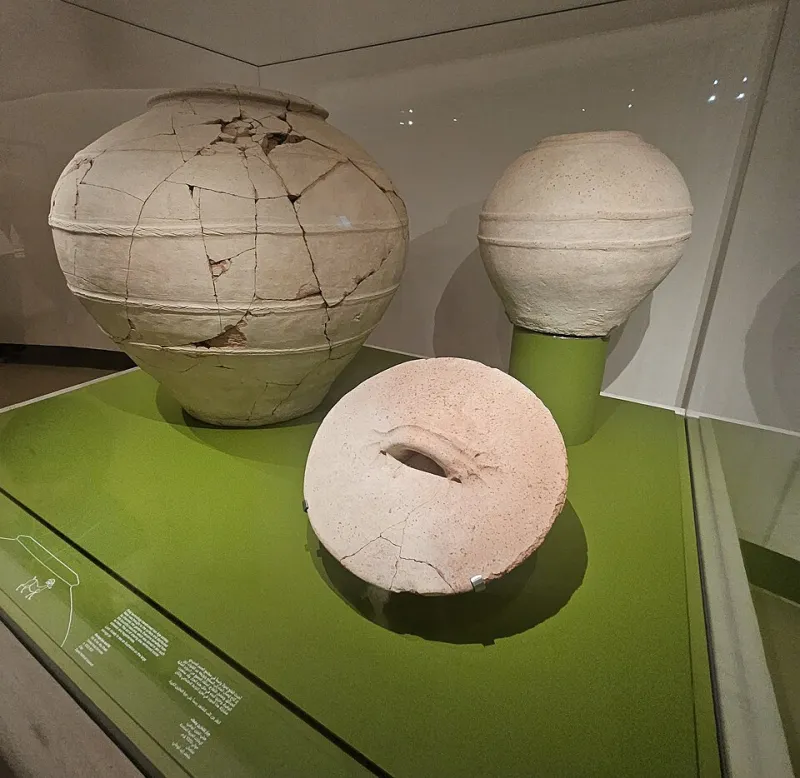
Photo: Mnczubair, CC BY-SA 3.0, via Wikimedia Commons
In the basement collections of certain American universities, there are cabinets that few undergraduates ever see. Inside them, catalogued by accession number and skeletal element, lie the remains of Indigenous ancestors—individuals excavated from burial sites in the nineteenth and twentieth centuries, acquired through purchase, donation, and practices that would not survive modern ethical review. In a number of medical and anthropology programs, these remains have long served a pedagogical purpose: anatomy instruction, osteology practicums, taphonomy demonstrations.
That practice is now under sustained challenge, and the profession should be honest about what the challenge amounts to. This is not a dispute over esoteric protocol. It is a question of whether the scientific enterprise may continue to use the bodies of people whose descendants object—people who were, in many cases, placed in the ground with the expectation of remaining there.
What NAGPRA Changed—and What It Didn't
The Native American Graves Protection and Repatriation Act of 1990 established a legal framework for returning ancestral remains and cultural items to lineal descendants and tribes. Its effects have been substantial: museums have deaccessioned thousands of individuals, and universities have confronted collections they had barely catalogued. Recent regulatory revisions have strengthened the requirement for consultation and curtailed the institutional discretion that previously allowed museums to delay returns indefinitely.
But NAGPRA's scope has limits. Remains whose cultural affiliation is contested or unproven may linger in limbo. And nothing in the statute categorically prohibits instructional use of remains during the window before repatriation. The gap between legal compliance and ethical practice is where the current controversy lives.
The Case Made for Continuing
Defenders of instructional use advance several arguments. Human remains, they note, are irreplaceable teaching material; synthetic models, however sophisticated, cannot replicate the variation found in real bone. Some argue that respectful research honors the dead by extracting knowledge from loss. Others point out that the individuals in question died long ago, and that consent frameworks designed for the living translate imperfectly to the ancient dead.
These arguments deserve serious engagement, and some have merit in the abstract. But they share a structural flaw: they privilege the convenience of institutions over the expressed wishes of the people most affected. Descendant communities have been unambiguous on this point for decades. The dead were not volunteers.
Consent as a Professional Standard
The alternative is not the abandonment of osteological science. It is a consent-based standard: remains are studied only with the agreement of descendant communities, and instructional programs are built on collections whose custodians have granted permission. Where consent is denied, models, casts, and digital scans—increasingly excellent—must suffice.
Critics warn that such a standard could shrink the available sample and slow research. Perhaps. But the profession already accepts comparable constraints in other contexts. We do not excavate cemeteries at will because the data would be valuable. We accept that some knowledge is not ours to take.
The universities that have moved first—returning collections, building collaborative research agreements, developing curricula that treat descendant communities as partners rather than obstacles—have discovered something instructive: the science has not collapsed. It has, in several cases, been improved by collaboration, gaining questions and perspectives that purely extractive approaches never generated.
The drawer should be emptied. Not because the past lacks scientific value, but because the living have the right to determine what happens to their dead. A profession built on careful reading of the past should be capable of reading its own moment that clearly.